Vallejo, CA · Garage Door Service
Garage Door Service for Rodeo, Built Around Its 1972 Housing Stock
Vallejo Garage Door Pros drives the 5 miles to Rodeo for spring, opener, and track repairs on the early-1970s doors common to this stretch of the bay.
- Repairs & new doors
- Springs & openers
- Serving 8 nearby communities
What Was Built Here
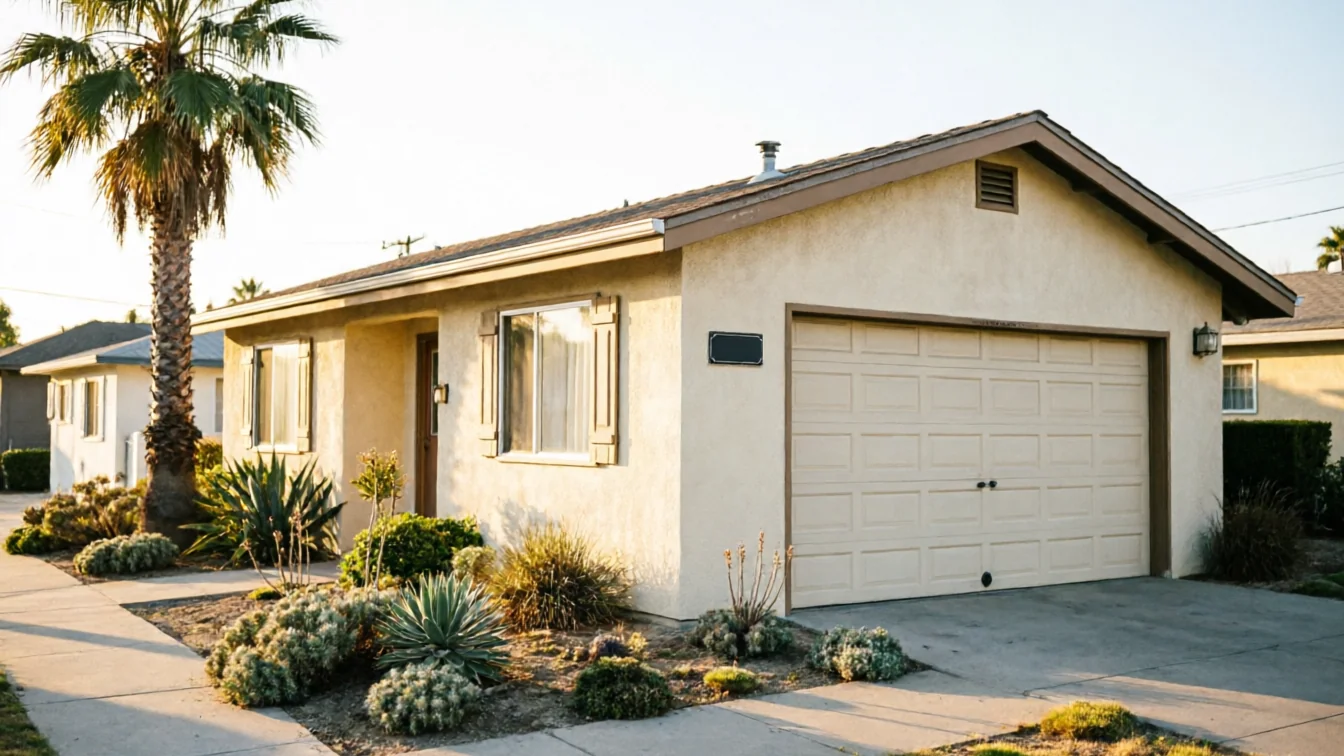
Rodeo's homes cluster around a median build year of 1972, a little later than the broader service area's 1967 median and square with the wider pattern of 1960s-70s construction that runs through 44 named communities out this way. That decade matters more than most people think when it comes to garage doors. A house framed in 1972 came with whatever hardware was standard for a tract builder that year, and a lot of those original setups are still bolted in place, patched over the decades rather than replaced. With roughly 2,969 households in Rodeo, that's a meaningful number of garages still running gear from the Nixon administration. The climate here is mild temperate, which has been kind to the metal - no deep freeze-thaw cycles cracking welds, no desert heat baking seals - so a lot of these doors have lasted on borrowed time rather than failing outright. Median household income in Rodeo runs around $88,819, noticeably below the wider Vallejo-area figure of $130,583, which we mention only because it shapes a real decision a lot of owners here face: repair the old door one more time, or finally replace it.
What That Means for Doors
A door going up in 1972 is more likely to run on extension springs mounted along the horizontal track than the torsion setup you'd expect in a newer build - torsion bar systems became standard practice in a lot of tract housing only as the '70s wore on. That difference changes the repair: extension spring replacement means handling two springs and safety cables instead of one torsion bar, and the hardware brackets from that era aren't always a drop-in match for what's sold today. Steel panel doors from this period are also thinner gauge than current stock, so a bent panel from a car bumper tends to warp the whole section rather than dent cleanly. Openers from a 1972-era garage have usually been swapped at least once by now, but the rail and mounting bracket are often still the originals, which means a modern opener sometimes gets forced onto hardware it wasn't built for. None of this is exotic work - it's just not the same job as servicing a door from a 2005 subdivision, and treating it that way is how a five-minute adjustment turns into a return visit.
Where We Stop
We're honest about this: Vallejo Garage Door Pros runs out of Vallejo, about 5 miles from Rodeo, and there's no depot or stocked van sitting in town. That means parts for an unusual 1972-era bracket or a discontinued spring size sometimes have to be ordered rather than pulled off a shelf on the spot - we won't pretend otherwise. We also don't do custom wood door fabrication or structural framing work; if a header or jamb has rotted out behind the opening, that's a carpenter's job before it's a garage door job. What we will do is tell you straight when a repair on an old extension-spring setup is throwing good money after bad, versus when it's a $40 cable that just needs resetting. Given the lower median income here compared to the rest of the service area, we'd rather say that plainly than run up a bill on a door that's closer to the end of its life than the owner realizes.
What People Here Call About
The calls out of Rodeo skew toward exactly what you'd expect from a 1972-median neighborhood: snapped extension springs, frayed lift cables on doors that have never had the cable replaced, and openers grinding against bent or misaligned rail from decades of minor adjustments. We also hear from owners whose rollers have worn oblong rather than round - steel rollers from that era wear that way, and nobody notices until the door starts binding on one side. Fewer calls involve modern opener electronics, since most of those have already been swapped at least once. A smaller number come from folks who've just bought a Rodeo house and want the whole system looked at before anything breaks - often the smartest call anyone makes, given how much of the original 1972 hardware tends to still be in there somewhere.
Frequently asked questions
Why do garage doors in Rodeo seem to fail differently than newer builds nearby?
A lot of it traces back to the build year. Rodeo's housing runs around a 1972 median, which is older than much of the surrounding area, so you see more extension-spring setups and original steel brackets still in place. Those parts age and wear in different ways than the torsion systems common in newer construction.
Do you keep a truck stocked in Rodeo?
No. We run out of Vallejo, about 5 miles away, and drive out for each job. For common parts that's no issue, but an unusual bracket or an older spring size tied to 1970s hardware can mean a short order delay rather than a same-visit swap.
Is it worth repairing a door this old or should I just replace it?
Depends on what's actually broken. A snapped spring or frayed cable on an otherwise sound door is a straightforward repair. But if the panels are warped and the track is bent from age, we'll tell you plainly when a new door costs less over time than another round of patches.
Garage door services in Rodeo
Every service our crew runs in Rodeo, CA.
Book garage door service in Vallejo
Call now or request a quote - tell us what the door is doing and where you are.