Vallejo, CA · Garage Door Service
Garage Door Maintenance for Vallejo Homes
Vallejo's 1960s-era housing and mild coastal climate wear on garage door hardware in specific ways. Here's what maintenance actually catches before it fails.
- Repairs & new doors
- Springs & openers
- Serving 8 nearby communities
What Causes It Around Here
Most houses in this part of the service area went up between 1938 and 1996, with the bulk of that stock dating to the 1960s and 70s. That matters for maintenance because doors and openers from that era, or replacements sized to those original openings, were built with hardware that wasn't designed to run maintenance-free for decades. Torsion springs lose tension slowly, rollers wear flat spots, and the steel tracks on these older jambs shift slightly as the house settles over fifty-plus years.
The climate here is mild temperate, which sounds like an easy ride for a garage door, and mostly it is. You don't get the deep freeze that snaps springs overnight or the swing in humidity that warps wood panels in a season. But mild doesn't mean static. Daily temperature swings between a cool morning and a warm afternoon make steel expand and contract, and over years that cycling loosens fasteners, dries out lubricant on tracks and hinges, and lets cables walk slightly off their drum grooves. On a 1960s-stock garage, this shows up as the kind of slow drift that nobody notices until the door binds or the opener starts straining.
A lot of the openers we see in these older setups were upgraded once, maybe twice, but the track and spring hardware is original or close to it. That combination of aging mechanical parts and a moderate but constant thermal cycle is exactly why scheduled maintenance pays off here more than in places with newer housing stock.
What It Costs
We don't have a published flat rate to quote you here, and honestly any number we gave without seeing the door would be a guess, not a quote. Cost on a maintenance visit depends on what the door needs: a straightforward lube-and-adjust is a different job than one where a roller has worn through its bracket or a cable has started to fray.
What we can tell you is what drives the cost up or down. A single door with original hardware and no visible wear is the cheapest visit, because it's inspection, lubrication, and small adjustments. A double door, or one where springs are clearly unbalanced, takes more time and sometimes more parts. If a part needs replacing - a roller, a hinge, a cable - that's additional over the base visit, and we'll tell you the number before we do the work, not after.
One honest note: if your door is old enough that parts are hard to source, or if a maintenance visit turns up enough worn components that you're looking at replacing most of the hardware piece by piece, we'll say so. At that point a repair bill can add up to more than a planned opener or door swap, and we'd rather tell you that than keep billing small visits.
What the Repair Takes
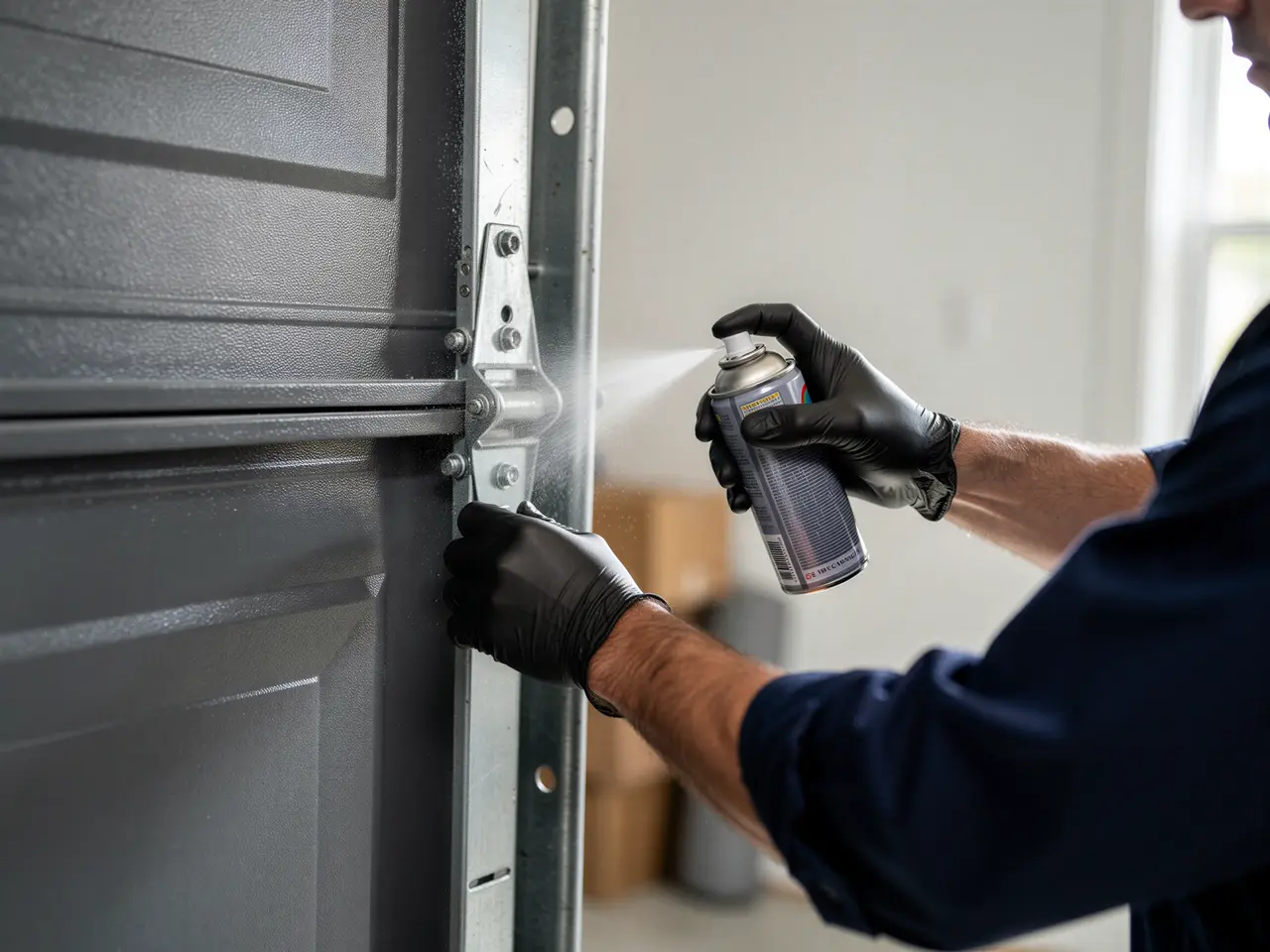
A standard maintenance visit covers the whole moving system, not just the parts that squeak. We check spring tension and balance, inspect cables and drums for fraying or wear, lubricate rollers, hinges, and track, tighten the hardware that's worked loose from thermal cycling, and test the opener's force and travel limits. On a door that's original to a 1960s or 70s build, we pay particular attention to the track alignment, since decades of minor house settling is the most common reason these doors start binding partway through a cycle.
Most of this is hand tools and time, not parts. If everything checks out, a visit runs well under an hour. If we find a roller that's worn through or a cable starting to separate, we'll flag it and quote the fix separately rather than surprise you on the bill.
What maintenance does not do is fix a door that's already failed - a snapped spring or a cable off the drum is a repair call, not a maintenance visit, and we'll tell you that on the phone before we come out. The value of the maintenance visit is catching the wear before it gets to that point, which on hardware this age is a real cost difference, not a sales line.
How It Shows Up
The signs are usually small before they're expensive. A door that used to run silent starts making a dry, grinding sound partway up - that's rollers or hinges that have gone through their lubrication and are running metal on metal. A door that visibly tilts or drops unevenly as it closes usually means a cable has started to slip or a spring has lost tension on one side, both common on original hardware once it's past its first few decades.
On houses with original 1960s-70s track mounted to jambs that have settled slightly over the years, you'll sometimes feel the door catch or hesitate at the same spot every time it travels - that's a track alignment issue, not an opener problem, and it's one of the most common findings on a maintenance visit in this part of the service area.
If your opener has started running longer or straining audibly to lift the door, that's often the earliest warning of spring wear, and it's worth a call before the spring goes all the way and the door becomes unliftable by hand. None of these on their own mean a major repair. Caught at the maintenance stage, most are a lubrication and adjustment job, not a parts replacement.
Frequently asked questions
How often should I get my garage door serviced in Vallejo?
There's no single number that fits every house, but on original hardware from the 1960s-70s building era common in this area, an annual check catches most wear before it becomes a failure. Newer doors and openers can often go a bit longer between visits.
Does Vallejo's climate wear out garage door parts faster?
The mild temperate climate here doesn't bring the freeze-thaw damage or heavy humidity swings that hammer doors elsewhere, but the steady daily temperature cycling still loosens fasteners and dries lubricant over years, which is why hardware from the 1960s-70s era still needs regular attention.
Can maintenance fix a door that won't open?
Usually not. A door that's stuck, won't lift, or has a visibly snapped spring or slipped cable needs a repair call, not a maintenance visit. Maintenance is for catching wear before it reaches that point.
Is a maintenance visit worth it on an older door?
Often, yes - on original hardware from the area's 1960s-70s housing stock, a visit that catches a worn roller or loosening track mount early is usually far cheaper than waiting for that part to fail outright.
Related services
By Neighborhood
Maintenance across the Vallejo area
We also handle maintenance in these Vallejo-area suburbs.
Book garage door service in Vallejo
Call now or request a quote - tell us what the door is doing and where you are.