
Vallejo, CA · Garage Door Service
Garage Door Maintenance for Rodeo's 1972-Era Doors
Rodeo's garage doors mostly date to 1972 steel sectional stock. Vallejo Garage Door Pros services the 5-mile run from Vallejo with tune-ups built for that hardware.
- Repairs & new doors
- Springs & openers
- Serving 8 nearby communities
What the Repair Takes
Most of Rodeo's garage doors went up around 1972, a few years past the service area's overall median build year of 1967. That matters because a 1972 door is almost always a steel sectional panel door, not the older one-piece slab you still find on houses closer to the core of Vallejo. Sectional doors carry different hardware: extension springs mounted along the horizontal track, or early torsion setups bolted to a header that's now over fifty years old. A tune-up on a door like this means checking the track alignment, the spring tension, the roller condition, and the header bolts for wood that's started to split around the fasteners.
We run the truck out the five miles from Vallejo for these calls. There's no branch office or satellite crew sitting in Rodeo waiting on a job - it's one company, one shop, and the truck makes the trip when you call. That's worth knowing up front because it means scheduling is built around routing from Vallejo, not around a local dispatch sitting around the corner.
A maintenance visit on a door this age usually runs longer than on a newer one. Fifty-plus years of use means more fasteners to check, more rust to look at on the cable drums, and more judgment calls about what's still serviceable versus what's due for replacement.
How It Shows Up
On a 1972-built door, the first sign of trouble is almost never the opener - it's the track. These doors run on steel track brackets that were never meant to be adjusted more than once or twice in a lifetime, and after five decades most of them have shifted slightly out of plumb. You'll hear it as a scrape on one side as the door travels, or see the rollers riding the edge of the track instead of the center.
The second common sign is a door that feels heavier at the bottom of its travel than at the top, or that drops the last foot faster than the rest of the run. That's usually spring fatigue - extension springs from this era weren't built with the cycle life that torsion springs get today, and after thousands of open-close cycles they lose tension unevenly.
A third sign, more specific to households that haven't had the door serviced in years, is an opener that reverses on its own partway up. That's often the limit switches drifting out of calibration as the door's own travel has slowed from wear, not the opener itself failing. None of these are emergencies on their own, but left alone they turn a $150 tune-up into a spring replacement or a full hardware swap.
What Is on the Truck
For doors from this era, the truck carries extension spring sets sized for the shorter, lighter sectional panels common to early-70s construction, along with the conversion hardware to move a door from extension springs to a torsion bar when that's the better fix. We stock steel rollers in both nylon and standard steel - nylon for the quieter ride most owners want now, steel for anyone who'd rather not pay for the upgrade.
We also carry header reinforcement brackets, because a 1972 door's wood header has usually taken fifty years of vibration from the spring anchor points, and a maintenance visit is the right time to catch a header that's splitting before it lets go under tension.
What we don't carry on every truck is a replacement panel matched to every obsolete sectional profile from this period - some of these panel designs were discontinued decades ago, and matching a single damaged panel to an otherwise sound door can mean a special order with a real wait. That's the honest limit: we can keep the hardware running, but we can't always match the skin of a fifty-year-old door on the spot.
What Causes It Around Here
Rodeo sits in the mild temperate band that covers the wider service area - no extreme heat swings, no hard freeze cycles that crack rubber seals the way a harsher climate would. That's a point in these doors' favor. What works against them instead is simple age and the smaller household count locally: at roughly 2,969 households, Rodeo is a small share of the 280,164 households across the full service area, and a smaller town like this gets less routine attention from any outside contractor, which means more doors here have gone a decade or two between real maintenance visits.
Income plays a role too. The median household income in Rodeo runs around $88,819, well under the $130,583 median for the broader service area. That gap shows up in deferred maintenance - owners here are more likely to wait until a door won't open at all before calling, rather than catching a worn roller or a loose header bolt early. It's not a judgment, just a pattern we see on the truck: doors here tend to get fixed in full failure mode rather than tune-up mode.
Doing It Yourself
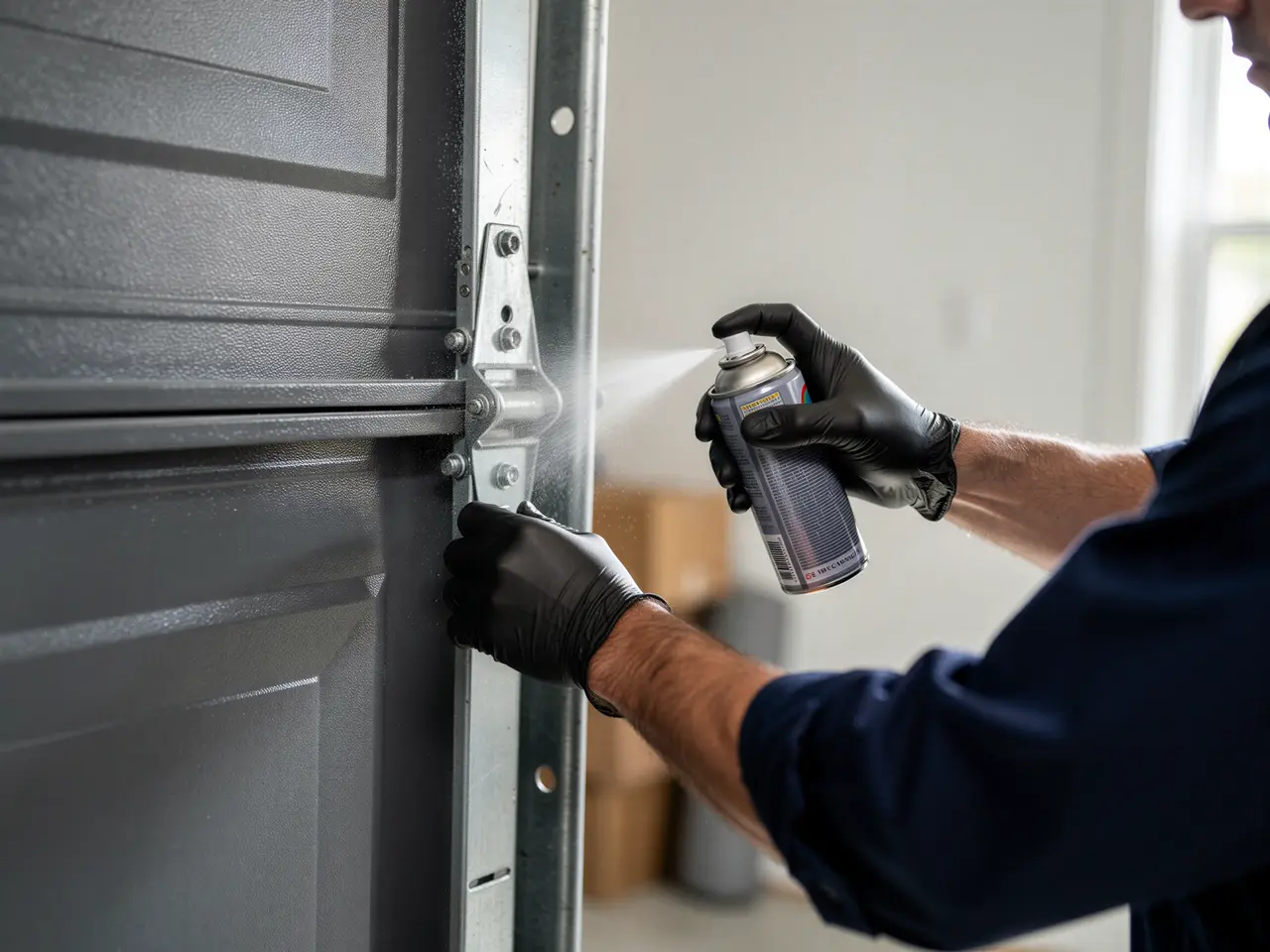
You can do some of this yourself between visits. Once a month, run a flashlight along the track and check for rust streaks at the bracket bolts - that's the first sign of a header starting to split on a door this age. Lubricate the rollers and hinges with a garage-door-specific lubricant, not household oil, which attracts grit and makes the noise worse over time.
You can also do the balance test: disconnect the opener, lift the door halfway by hand, and let go. A door with springs still in good shape will hold roughly in place. One that drops is telling you the springs have lost tension, and that's not a DIY fix - extension and torsion springs are both under enough load to cause real injury if they're handled wrong.
What you shouldn't do on a door built in 1972 is assume a quiet door is a healthy one. Many of these doors run quiet right up until a cable frays through or a bracket finally lets go. A once-a-year check from someone who knows what fifty-year-old hardware looks like when it's about to fail catches problems the ear alone won't.
Frequently asked questions
How old are most garage doors in Rodeo?
Most houses in Rodeo were built around 1972, which is a bit newer than the roughly 1967 median across the wider service area. That means most doors here are steel sectional panels on extension or early torsion hardware, not the older one-piece slab doors you'll still find on some older homes closer to Vallejo.
Does Vallejo Garage Door Pros have an office in Rodeo?
No. The company works out of Vallejo and makes the roughly five-mile drive to Rodeo for service calls. There's no local branch or satellite crew, just a truck routed out from Vallejo when you book a visit.
Why does my door feel heavier at the bottom than at the top?
That's a common sign of spring fatigue in doors from this era. Extension springs installed in the early 1970s weren't built for the cycle life modern torsion springs get, and after decades of use they lose tension unevenly, which makes the last foot of travel feel heavier or faster.
Can every damaged panel be replaced to match the rest of the door?
Not always. Some sectional panel profiles from the early 1970s were discontinued years ago. We can keep the hardware - springs, rollers, track - running reliably, but matching a single damaged panel on an otherwise original door sometimes means a special order and a real wait.
Book garage door service in Vallejo
Call now or request a quote - tell us what the door is doing and where you are.