Vallejo, CA · Garage Door Service
Garage Door Repair for Vallejo's 1960s and 70s Housing Stock
Broken springs, bent tracks, and dying openers on Vallejo's 1960s-70s garage doors. We know why these houses fail the way they do and what it takes to fix them right.
- Repairs & new doors
- Springs & openers
- Serving 8 nearby communities
What Causes It Around Here
Vallejo's housing stock runs mostly 1938 to 1996, with the median build year landing at 1967, so a lot of garage doors here are still on the original torsion hardware from that stretch. That's not a complaint about the houses - it's just math. A spring rated for 10,000 cycles back when the house went up has had sixty-plus years to use them up, whether or not anyone ever noticed.
Across the 44 named areas that make up Vallejo's housing stock, the 1960s and 70s dominate, which means a torsion spring call here is more often a 40-year-old spring than a storm-damaged one. We don't see much weather-driven failure in this climate band - Vallejo sits in a mild temperate zone, and towns four to six miles out like Crockett and Benicia share that same mild air, so doors aren't fighting frost-swollen tracks or ice-locked rollers the way shops further inland deal with.
What we do see is fatigue: steel rollers worn oval, cable ends frayed from decades of the same stretch and release, and openers from a later retrofit bolted onto hardware that predates them. The door looks fine sitting still. It's the daily cycling that's been quietly running the clock.
What It Costs
We're not going to put a number here that isn't backed by a real quote, because garage door repair costs swing hard depending on what actually broke. A single roller swap and a torsion spring replacement on a double door are not the same job, and an opener that needs a new logic board costs nothing like an opener that just needs a new drive belt.
What we can tell you is what drives the number: spring size and whether it's a single or double door, whether the track is bent or just out of alignment, whether the opener is original equipment or a later add-on, and how hard the part is to source. On a lot of Vallejo's older doors, that last factor matters more than people expect - hardware sized for a house built in the 1960s doesn't always match what's on the shelf today.
We give a real number after we look at the door, not before. If a repair is going to cost close to what a new door costs, we say so. Sometimes patching an old door is just throwing money at something that's going to fail again in a year, and we'd rather tell you that up front than bill you twice.
What the Repair Takes
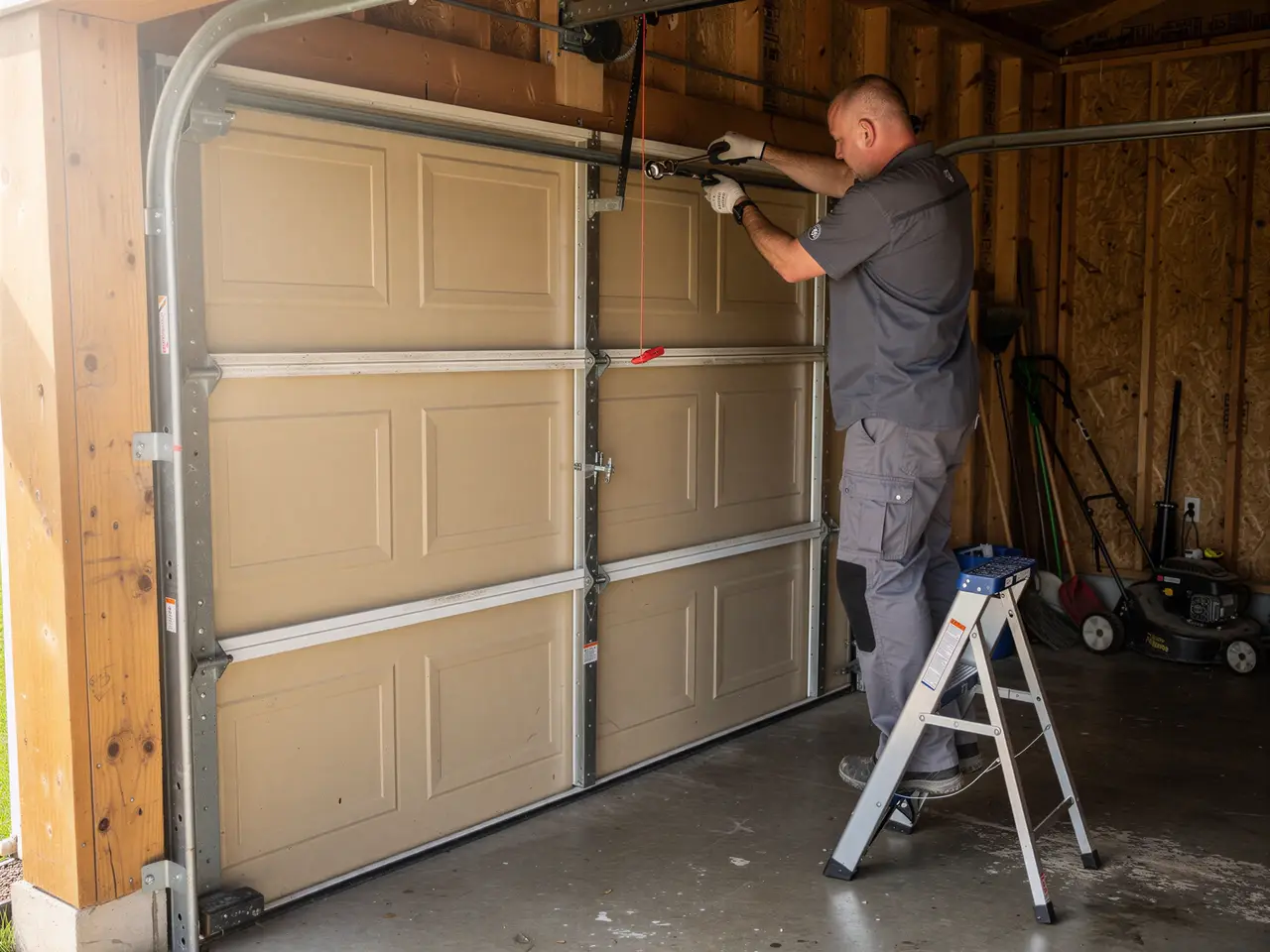
Most torsion spring jobs and roller replacements on Vallejo's older doors take one visit. We bring common spring sizes and standard rollers and cables on the truck, because those cover the bulk of the 1960s-70s stock that makes up most of this area's garages.
Where it slows down is original hardware that nobody manufactures anymore - certain track brackets, older drum styles, a handful of opener models from that build era. When that happens, we tell you straight that the part has to be ordered, and we give you a real timeline instead of a guess. That's the honest limitation on same-day work here: we can fix almost anything on the truck, but we can't manufacture a discontinued bracket on the spot.
For openers, the repair usually comes down to whether the motor and logic are sound and it's a belt, gear, or sensor issue, or whether the unit itself has reached the end of its run. On a door that old, replacing the opener outright is sometimes the more honest answer than chasing intermittent faults on a board that's been running since the Nixon administration's tail end - or close to it, given the median 1967 build year on these streets.
How It Shows Up
The door starts slow, and it rarely announces itself as a spring problem. You notice the opener straining on the way up, or the door sagging a half-inch on one side when it's down. Sometimes it's a loud bang from the garage - that's usually a torsion spring letting go, and it's genuinely startling the first time you hear it in a quiet Vallejo neighborhood.
Other times it's quieter: a roller grinding instead of rolling, a cable starting to fray where it wraps the drum, a track that's pulled slightly away from the wall because the door's been riding crooked for months. On the original hardware common across this area's 1960s and 70s builds, these signs show up gradually, not all at once.
If the door won't open at all, don't force it with the opener - that's how a cable finishes snapping or a panel gets bent further. Pull the release, open it by hand if it'll move, and call. If it moves freely by hand but the opener won't lift it, that's almost always the opener or its drive system, not the door itself.
Frequently asked questions
Why do Vallejo garage doors break down more than newer builds elsewhere?
It's mostly the age of the hardware. Vallejo's housing stock centers on a median build year of 1967, so a large share of doors are still running original torsion springs and rollers from that era. Parts wear out on a schedule regardless of climate, and this area's mild weather isn't adding extra stress on top of that normal fatigue.
Is it the spring or the opener when the door won't lift?
Pull the manual release and try lifting the door by hand. If it's heavy or won't move, that's the spring. If it lifts smoothly by hand but the opener won't do it, the problem is in the opener or its drive system, not the door itself.
Can you always get parts for an older torsion setup same day?
Not always. Common spring sizes and standard rollers are on the truck, but some original hardware from Vallejo's 1960s and 70s housing stock has been discontinued. When that happens we order it and give you a real timeline rather than guessing.
Related services
Related guides
By Neighborhood
Garage Door Repair across the Vallejo area
We also handle garage door repair in these Vallejo-area suburbs.
Book garage door service in Vallejo
Call now or request a quote - tell us what the door is doing and where you are.