Vallejo, CA · Garage Door Service
Garage Door Repair for Rodeo Homes
Rodeo's median income runs well under the area average, which changes the repair math. We bring torsion and chain-drive parts for 1970s-era doors the five miles from Vallejo.
- Repairs & new doors
- Springs & openers
- Serving 8 nearby communities
What the Repair Takes
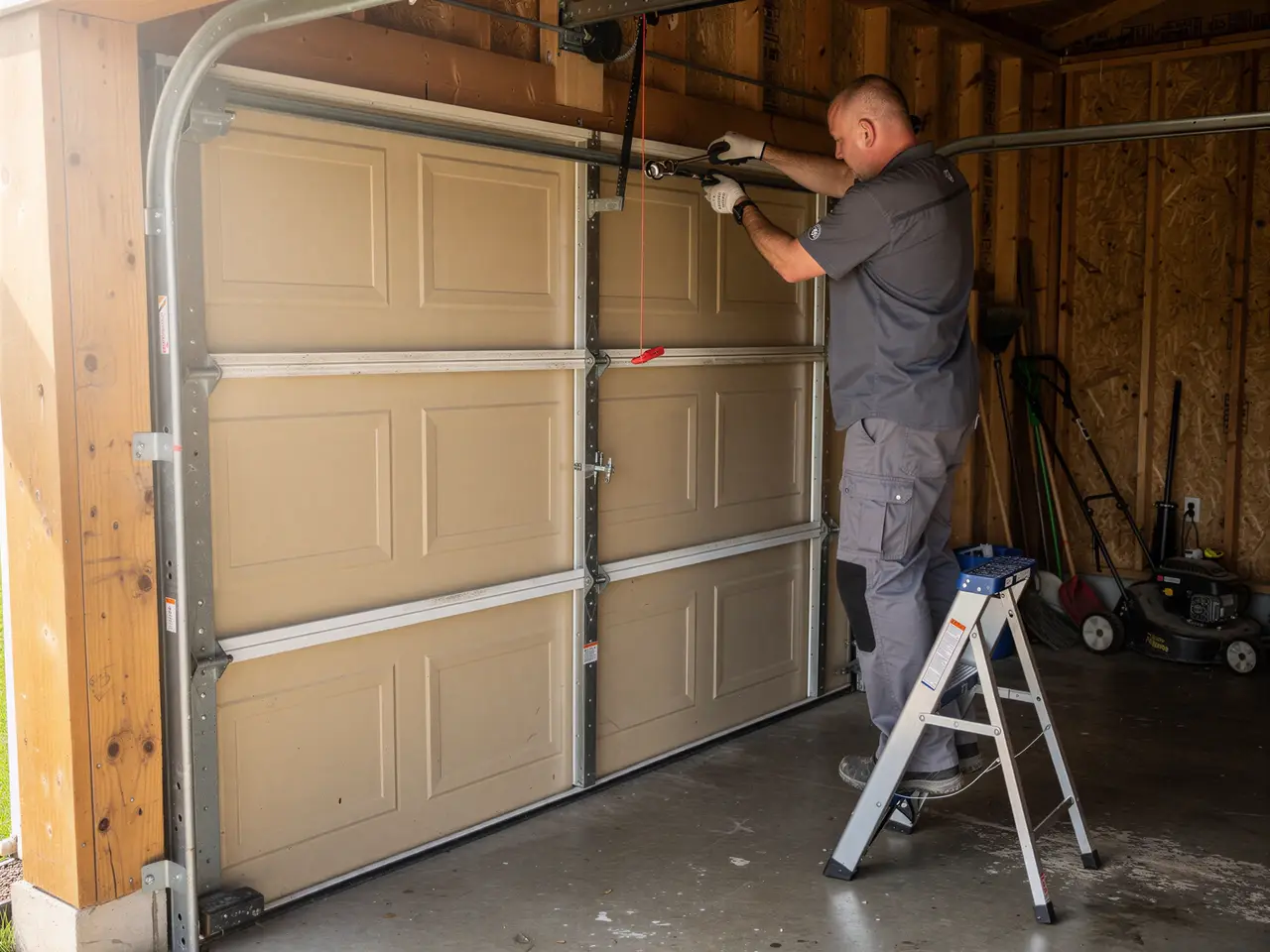
Rodeo's median household income is $88,819, well under the $130,583 median across the rest of the area we cover out of Vallejo. That gap matters more than people think when a spring snaps or an opener dies, because it shifts where the repair-or-replace line sits. On a door that would get swapped out without a second thought in a higher-income neighborhood, we're more often looking at a torsion spring change, a roller set, or an opener board instead of a full replacement. Most of what breaks on a Rodeo door is fixable for a fraction of a new unit's cost, and that's usually the right call here. We're not going to talk anyone into a new door when the track is straight, the panels are sound, and the only thing wrong is a $200 part. Replacement makes sense when the door itself is failing - rotted bottom panel, warped track, a drum that's cracked - not just because something broke. We price the job in front of you before we touch it, so you can decide which side of that line you want to be on.
How It Shows Up
Houses in Rodeo mostly went up around 1972, a touch newer than the 1938-1996 range (median 1967) that covers the rest of the service area. That five-year difference lands right at the point builders were switching from extension springs mounted along the horizontal track to torsion springs over the header. We see both setups here, sometimes on the same street. A door that's gotten loud and starts sagging on one side is usually an extension spring going soft or a cable fraying off its drum. A door that won't budge at all, or slams down fast when the opener releases it, is almost always a torsion spring that's already broken - the kind of job where you want the panel supported before anyone works on it. Openers from that era are often chain-drive, and by now most have gone through at least one motor or logic board swap already. If yours grinds before it moves, or reverses for no reason, the circuit board or the travel limits are usually the culprit, not the door itself.
What Is on the Truck
We carry torsion springs in the sizes that fit 1960s and 1970s residential doors, along with extension spring kits for the houses that never got converted. Chain-drive opener parts - sprockets, logic boards, limit switches - ride along too, since that's still the most common drive type on this stretch of houses. Cables, rollers, and standard hinges are stocked in bulk because they fail the most. Here's the honest part: if your door has an older panel profile or a discontinued opener model, we may not have the exact match on the truck that day. Some of those parts are special-order now, and we'll tell you straight if that's the case rather than jury-rig something that won't hold. On a standard torsion or extension spring job, or a common opener fault, we're usually done in one visit. On a parts-order situation, we'll get you a timeline before we leave.
What Causes It Around Here
The climate band here is mild temperate, so we're not fighting the freeze-thaw cycles or heavy humidity swings that chew through hardware in harsher regions. That's a point in Rodeo's favor - springs and cables here fail mostly from age and cycle count, not corrosion. What that means in practice is predictable: a torsion spring rated for around 10,000 cycles that's been opening and closing twice a day since the early 1970s has done its job and is overdue, not damaged by weather. Bottom brackets and rollers wear the same way, through use rather than rust. The one exception is hardware installed low near grade on older extension-spring setups, which can pick up moisture over the decades even in a mild climate. Outside of that, if something's failing on a Rodeo door, the first question we ask is how old the part is, not what the weather's been doing.
Doing It Yourself
Lubricating hinges and rollers, tightening loose bolts on the track brackets, and testing the auto-reverse safety feature are all fine to do yourself, and worth doing a couple times a year regardless of the door's age. Clearing the photo-eye sensors and keeping the track free of debris takes five minutes and prevents a lot of false service calls. What we don't recommend touching: torsion springs, period. They're under enough tension to cause serious injury, and on a 1970s-era door the hardware holding them is also that old, which raises the odds of something else letting go at the same time. If the door is off-track or came down hard and won't move, leave it where it is and call rather than forcing it back onto the rail yourself - that's usually how a simple spring job turns into a bent track and a bigger bill.
Frequently asked questions
Is it worth fixing an old garage door in Rodeo or should I replace it?
Depends on what's actually broken. If the track is straight and the panels are solid, a spring or opener repair almost always costs less and lasts for years. Given the income range here, we lean toward repair unless the door itself - panels, track, or frame - is failing, not just a part.
Why is my opener from the 1970s still chain-drive and loud?
Chain-drive was standard on openers installed when a lot of Rodeo's housing went up, around 1972, and plenty of those units or their replacements are still chain-drive today. Loud usually means the chain needs tension or lubrication, or the sprocket's worn - not necessarily a dying motor.
Do you have a shop in Rodeo?
No, we run out of Vallejo and drive the five miles to Rodeo for calls. We carry the parts most common to this area's housing stock on the truck, so most jobs don't need a second trip.
Why did my garage door spring break with no warning?
Torsion and extension springs are rated for a set number of open-close cycles, and on a door from the early 1970s that count has likely been hit a long time ago. They don't usually give warning signs before the final break - that's just how spring steel fails.
Book garage door service in Vallejo
Call now or request a quote - tell us what the door is doing and where you are.