Vallejo, CA · Garage Door Service
Opener Repair for Rodeo Homes, Serviced Out of Vallejo
Opener repair for Rodeo, CA, a 5-mile run from our Vallejo shop. Built mostly from the 1960s-70s, Rodeo's openers show their age in predictable ways.
- Repairs & new doors
- Springs & openers
- Serving 8 nearby communities
What the Repair Takes
Rodeo sits five miles from our Vallejo shop, close enough that a tech can carry a fuller kit than a longer run would allow and still get to the job the same day. That short drive matters less for speed than for what it lets us bring along - we load for the fault we expect to find, not just a generic toolbox, because Rodeo's opener calls tend to repeat a pattern.
The town's housing stock centers on a median build year of 1972, which puts most garages a decade or two past when their original openers were new. That means the repair usually isn't a one-part swap. A failing logic board on a unit that old often comes with a worn drive gear or a chain that's stretched past adjustment, so the tech who shows up needs the parts for all three, not just the symptom you called about. We diagnose on site, price the actual fault, and don't swap a board when the gear underneath it is what's really grinding.
Most of these jobs run an hour or so once the tech is on the driveway. What takes longer is confirming the opener's travel limits and force settings are right for the door it's lifting - on a 50-year-old door, those settings drift, and an opener repaired without rechecking them can fail again within weeks.
How It Shows Up
The most common call is an opener that hums or clicks but the door doesn't move - that's usually a stripped nylon drive gear, a part that wears out from years of ordinary use, not abuse. Close behind it: a door that reverses before it closes, which almost always traces to the safety sensors near the floor, either misaligned or dirty.
On older units common to Rodeo's 1972-median housing, you'll also see remotes that work from the driveway but not from the street, or a wall button that works while the remote doesn't - both point to a failing receiver board rather than the remote itself. Some owners describe a light that blinks a set number of times before doing nothing else; that blink count is the opener telling you which circuit tripped, and it's worth noting before you call so the tech doesn't have to retest from zero.
A chain-drive opener that's gone quiet mid-cycle, with the door stuck halfway, is usually a snapped or badly slipped chain rather than a motor failure - an important distinction, because one is a parts swap and the other means the whole unit is done.
What Is on the Truck
For Rodeo calls we carry replacement logic boards, drive gear kits, chain and belt sections, and safety sensor pairs, since those cover the bulk of what fails on openers installed when these houses were built. We also stock universal remotes and keypads, because matching an exact original remote for a unit this old usually isn't realistic.
What we don't carry for every call is a full replacement opener - those get special-ordered once we know the make and lift type, so a same-day swap isn't always possible if the unit itself needs replacing rather than repairing. That's the honest limit here: we can fix the common failures off the truck, but a dead motor on a unit old enough to match Rodeo's typical 1972 build year sometimes means ordering a new unit rather than chasing parts for one that's reached the end of its service life.
We also carry basic hardware - hinges, rollers, cable - because an opener call often turns up a door-side issue at the same time, and it's wasteful to schedule a second trip for a five-minute fix found during the first.
What Causes It Around Here
Rodeo's climate sits in the same mild temperate band as the rest of the service area, so openers here aren't fighting the freeze-thaw cycles or extreme heat that wreck seals and plastics faster elsewhere. That's one reason these units often run decades past when you'd expect a failure - the climate isn't the stress, time is.
The bigger factor is simply age. With a median build year of 1972, a large share of Rodeo's openers are originals or first replacements, meaning the nylon gears, rubber belts, and early circuit boards are well past their expected life even with no damage at all. Capacitors dry out, gears get brittle, and contacts corrode just from sitting in a garage for fifty years.
Income plays into the decision more than the cause. Median household income in Rodeo runs $88,819, noticeably below the $130,583 median across the wider service area, and we see that reflected in the calls - more owners here ask us to repair a unit rather than replace it outright, and for a lot of these failures, repair is the right call anyway.
Doing It Yourself
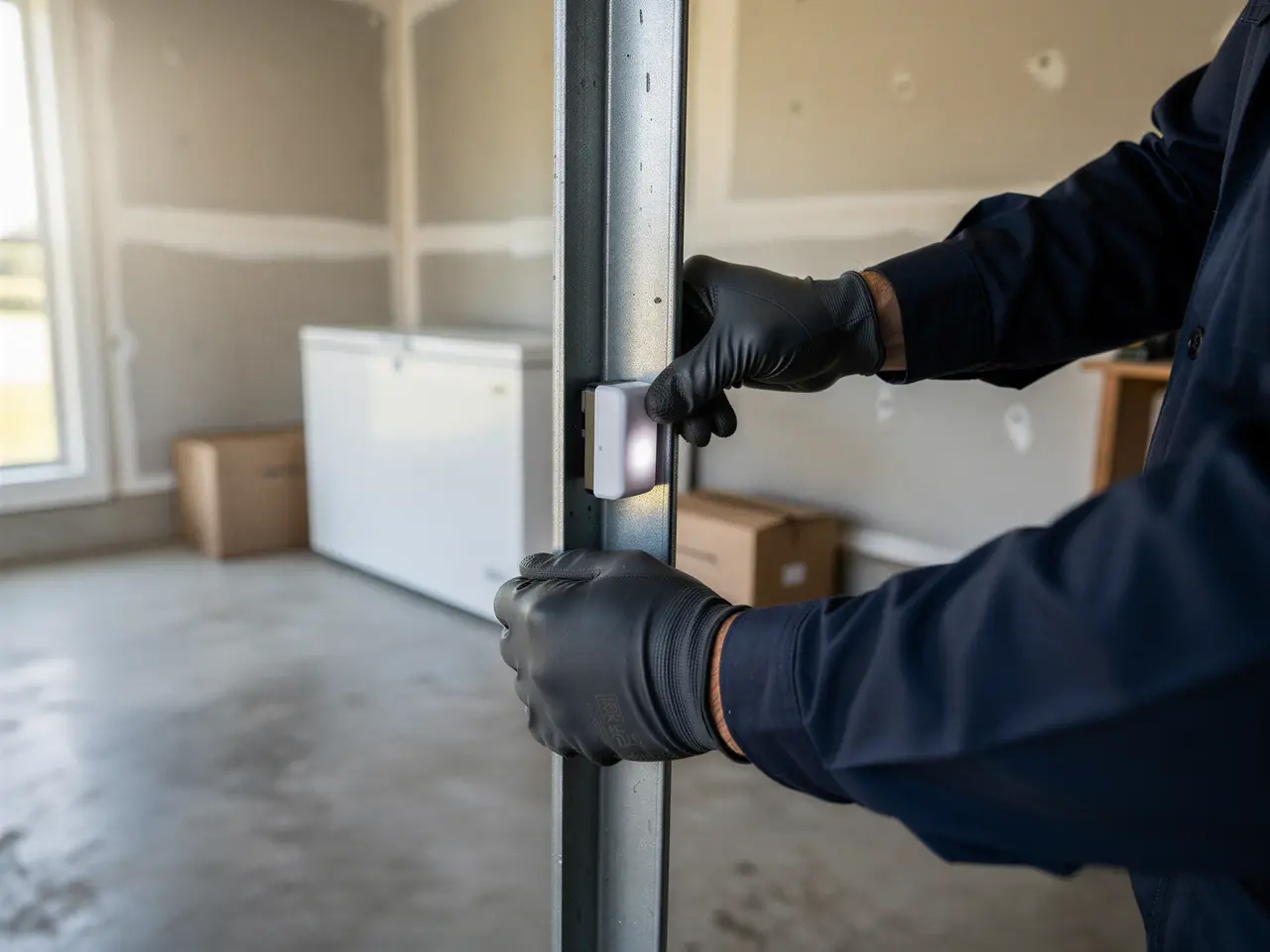
A few things are worth trying before you call. Clean the lenses on the two safety sensors near the floor with a soft cloth - a cobweb or a film of dust is enough to stop the door from closing, and it's a thirty-second fix. Check that the sensors are aimed at each other; a bumped sensor bracket from a stored bike or ladder is a common cause we find on these calls.
Replacing batteries in a remote or keypad is worth trying before assuming the receiver has failed. Beyond that, we'd stop. Opening the opener housing to look at a drive gear or logic board means working near a wound spring and a motor under tension, and on a unit as old as the ones common in Rodeo, the housing itself can be brittle enough to crack.
One honest limitation: we don't recommend DIY gear or board replacement on openers from this era, not because the part is hard to find but because matching the travel and force settings afterward takes test equipment most owners don't have. Get it wrong and the door can fail to reverse - which is the one failure mode you don't want to troubleshoot by trial and error.
Frequently asked questions
Is it worth repairing an opener this old, or should I just replace it?
Depends what's failed. A drive gear, chain, or sensor on an opener from a house built around 1972 is almost always worth fixing - those parts are cheap and the motor usually outlasts them. If the motor itself has burned out, replacement is usually the better call, and we'll tell you straight when we see that on site.
How fast can someone get to Rodeo from Vallejo?
We don't quote a fixed response time, since it depends on the day's schedule, but Rodeo is a short five-mile run from our shop, which is part of why we can usually fit it into the same day a call comes in.
Why does my opener work from the wall button but not the remote?
That split usually points to the receiver board inside the opener, not the remote itself. It's a common failure on units old enough to match Rodeo's typical 1970s-era housing stock, and it's a straightforward board swap rather than a full unit replacement.
Can I just buy a universal remote instead of calling for repair?
If the opener runs fine from the wall button and only the remote has failed, a universal remote paired to the existing receiver often solves it. If the receiver board itself has failed, a new remote won't fix anything - that's worth ruling out before you buy one.
Book garage door service in Vallejo
Call now or request a quote - tell us what the door is doing and where you are.