
Vallejo, CA · Garage Door Service
Openers, Power Outages, and the Vallejo Garage
Vallejo homes built mostly 1938-1996 carry older garage openers without battery backup. Here's what a power outage actually means for your door and when to call.
- Repairs & new doors
- Springs & openers
- Serving 8 nearby communities
What Is Going On
Most houses in this area went up between 1938 and 1996, with the median landing around 1967. That means a lot of garage openers here are either original to a 1960s or 70s build or a straight swap-in replacement installed on hardware from that same era. Across the 44 named areas that make up this housing stock, the pattern repeats: chain-drive unit, no battery backup, a manual release cord nobody's touched since move-in day.
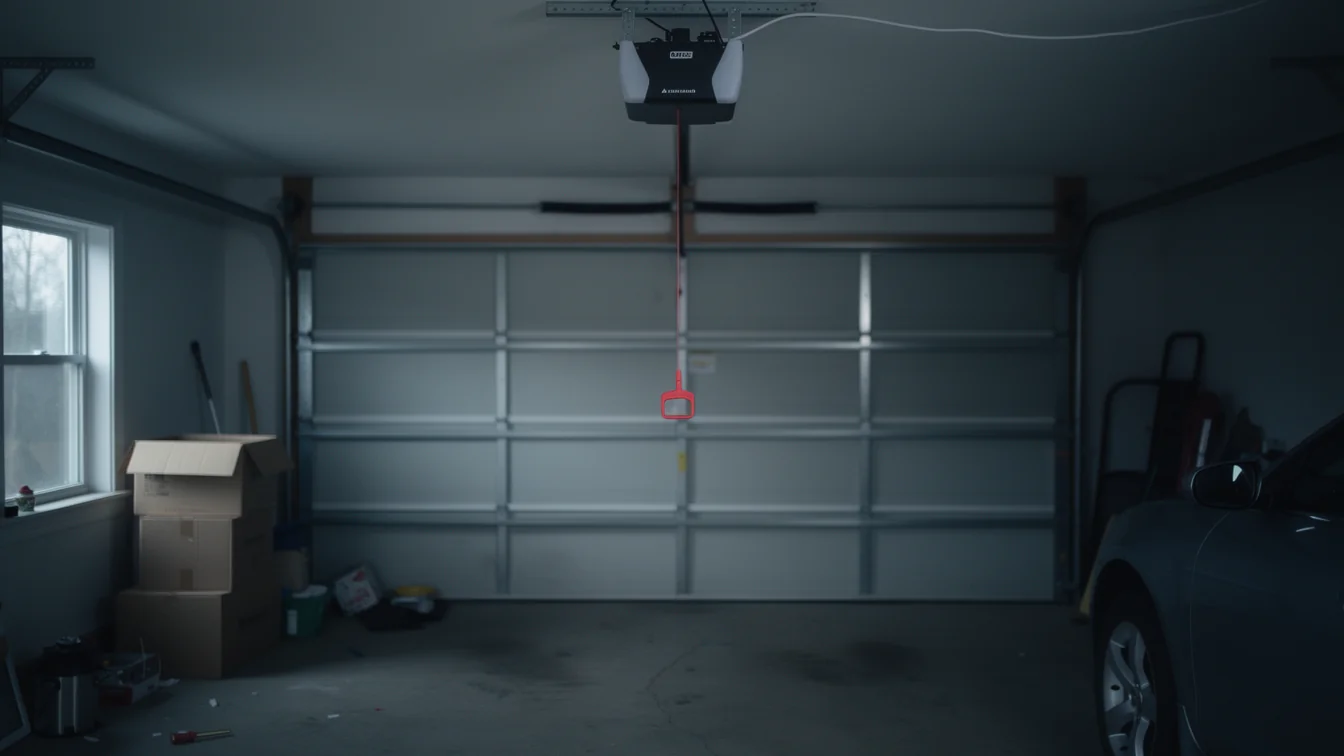
When the power goes out, that opener just stops. The door itself doesn't care - springs and cables do the lifting, not the motor - but the opener can't talk to the wall switch or the remote until power's back or you pull the red release cord and lift by hand. On a torsion spring in good shape that's not hard. On a worn one, it's a way to find out the spring was already close to failing.
The real issue isn't the outage itself, it's that so many of these openers were never built with a backup battery in the first place. They were installed when that wasn't standard, and nobody's gone back to add it since. That's a gap specific to housing this age, not a flaw in the door.
What the Weather Here Does to It
Vallejo sits in a mild temperate band, which actually works in your favor on this one. Openers in hotter inland climates take a beating - capacitors cook, lubricant breaks down faster, motors run hotter under load. Here, the motor isn't fighting extreme heat for months at a stretch, so a mid-2000s opener in a Vallejo garage isn't necessarily closer to failure just from age and sun exposure the way it would be somewhere harsher.
That doesn't mean the opener is immune to anything. Power outages happen regardless of climate - grid issues, utility work, equipment failure upstream - and a mild climate doesn't change how an opener behaves when the power drops. It just means you're not also dealing with heat-stressed electronics on top of it. The honest limitation here: we don't have outage frequency data for this area, so we're not going to tell you how often you'll lose power or for how long. What we can tell you is that when you do, the fix (a battery backup unit, or just knowing where the release cord is) has nothing to do with the weather and everything to do with whether your opener was ever built for it.
What It Costs
We don't have pricing figures to hand you here, so we're not going to invent a number. What we can tell you is how to think about it. A battery backup unit is an add-on to an existing opener, not a full replacement, in most cases - it's a one-time part, not an ongoing cost. For a household in this service area, where median income runs $130,583 and there are 116,359 owner-occupied houses, that kind of upgrade tends to sit in the category of a reasonable one-time job rather than a stretch purchase.
The bigger cost driver isn't the battery, it's the age of the opener itself. If the unit's original to a house built in the 1960s or 70s, which a lot of them are, you may be looking at a full opener replacement rather than an add-on, because older chain-drive units often can't accept a backup battery retrofit at all. That's a call we make by looking at the actual unit in your garage, not over the phone.
When Waiting Is Fine
If your opener works fine and you've just never dealt with a power outage before, you don't need to do anything today. The door still opens by hand with the release cord, and that's true whether the opener is five years old or thirty. Waiting is also fine if you're not sure yet whether you want a battery backup or a full opener swap - that's worth figuring out once, not twice.
If you're a few miles out toward Crockett or Rodeo, or anywhere else in this same stretch of 1938-1996 housing, the calculus doesn't change much by location. What does change it is whether the opener you have is a chain-drive unit old enough that backup isn't even an option, in which case waiting just means you'll be doing the lift-by-hand routine every time the power drops. That's a fine way to live if it doesn't bother you. It's not fine if the spring underneath is also due - and that's the part worth having someone actually look at before you decide to leave it alone.
Frequently asked questions
Will my garage door opener work during a power outage?
No, not without a battery backup. The motor needs power to run, so when it's out, the opener won't respond to the wall switch or remote. The door itself still opens - pull the manual release cord and lift by hand. Most openers installed on houses from this area's 1960s-70s building wave don't have backup batteries unless someone's added one since.
Does Vallejo's mild climate mean my opener lasts longer?
It helps. A mild temperate climate means the motor isn't running under sustained extreme heat, which is one of the bigger stressors on opener electronics and lubricant. It won't offset age on its own, but on a house from this area's older building stock, it's one less factor working against the unit.
Can any opener take a battery backup?
Not always. Many older chain-drive units, common in houses built decades back in this area, weren't designed for a backup retrofit. Some can take an add-on, some can't. We'd need to look at the actual unit to tell you which situation you're in rather than guess.
Is it worth replacing an opener just for battery backup?
Depends on the opener's age and condition otherwise. If it's original to an older house and already showing other wear, a full replacement that includes backup built in often makes more sense than patching an old unit. If it's newer and running fine, an add-on battery is usually the simpler route.
Related garage door services in Vallejo
More garage door guides
Book garage door service in Vallejo
Call now or request a quote - tell us what the door is doing and where you are.