Vallejo, CA · Garage Door Service
Replacing a Garage Door in Vallejo: What You're Actually Dealing With
What Vallejo homeowners should know before buying a replacement garage door, from 1960s-era housing stock to mild coastal climate and what drives cost.
- Repairs & new doors
- Springs & openers
- Serving 8 nearby communities
What Is Going On
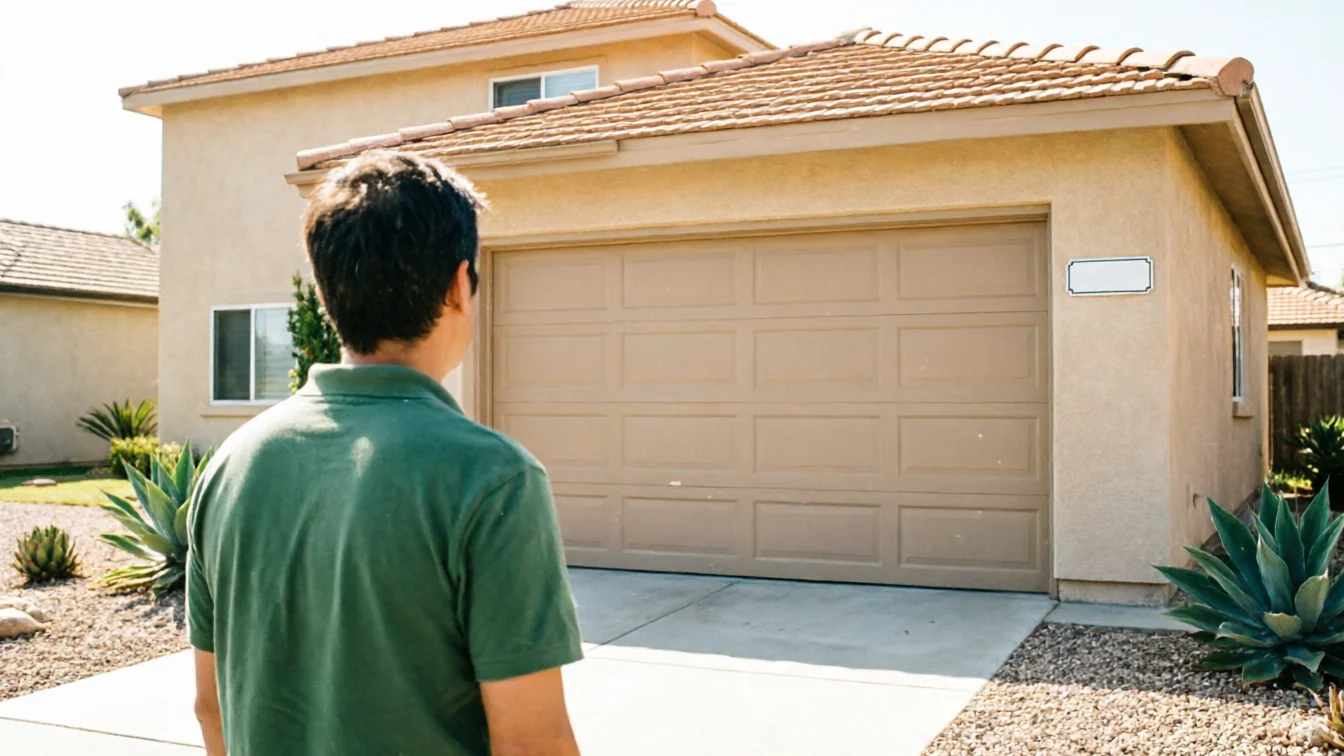
Most of the housing stock around Vallejo went up between 1938 and 1996, with the median landing around 1967 and the bulk of it concentrated in that 1960s-70s wave that shows up across all 44 named areas in this part of the county. That matters because a door built for a 1967 opening is rarely the same width, same track clearance, or same wall thickness you'd see on new construction. A lot of these garages still carry their original section - single-layer steel, no insulation, hinges worn oval from fifty-plus years of cycling.
When a homeowner calls about "replacing the door," what's actually going on is usually one of three things: the panel sections have rusted or dented past the point of a clean repair, the track and hardware are the original 1960s gauge and no longer match anything a supplier stocks, or the opener has been swapped out once already but the door itself never was. Knowing which one you've got changes the job. A door that's structurally fine but has a dead opener is not a replacement job. A door with pitted bottom panels and a bent track almost always is.
What the Weather Here Does to It
Vallejo sits in a mild temperate band - no deep freezes, no monsoon season, nothing that snaps a torsion spring overnight the way a hard freeze does elsewhere. That's the good news. The slower, less dramatic problem is what decades of that same mild, often damp marine air does to steel that's been sitting in a garage since the 1960s or 70s: slow surface rust at the bottom panel seams, where water sits after a wet winter and never fully dries out between storms.
This is why a lot of the doors we look at here don't fail with a bang - they fail in inches, at the bottom two feet of the panel, right where moisture pools against the weatherstrip. If you're buying new, that's the detail worth paying attention to: a bottom panel rated for coastal moisture, or at minimum a design that drains instead of trapping water, matters more here than wind rating or insulation R-value ever will.
What It Costs
We don't have a flat number to hand you - every door, opening, and hardware condition is different, and a steel single-layer replacement on a standard 1960s single-car opening is a different job from an insulated double door with custom track clearance. What we can tell you is what drives the number: panel material and insulation level, whether the track and springs need replacing alongside the door (common on original 1960s-70s hardware), and opening size, since a lot of these older Vallejo garages were built to dimensions narrower than what's standard today.
Household income in this service area runs a median around $130,583, and we see that reflected in the range of doors people choose - plenty go with a solid mid-grade steel door rather than the top-tier insulated options, and that's a reasonable call on a door that just needs to work. We'll always give you the real number for your opening before any work starts, not a phone estimate.
When Waiting Is Fine
Not every old door needs to come out. If your panels are intact, the rust is cosmetic surface spotting rather than through-metal pitting, and the door still seals at the bottom without daylight showing through, you can often get years more out of it with new weatherstrip and a hardware service. We'd rather tell you that than sell you a door you don't need yet.
Waiting makes less sense once a panel is visibly bowed, the bottom section has rusted through rather than just surface-spotted, or the track is bent enough that the door binds going up. At that point a repair is a stopgap, and given how much of the housing around here is already past 50 years old, a door that's failing structurally usually means the opener and hardware aren't far behind it. We'll tell you straight which category yours is in when we look at it - we don't push a replacement on a door that's got life left.
Frequently asked questions
Why does my garage door feel so much heavier or stiffer than it used to?
On a lot of the 1960s-70s era doors around Vallejo, that's worn rollers or a spring that's lost tension gradually rather than snapped outright. Original hardware from that build era wasn't designed to run forever, and slow wear shows up as stiffness before it shows up as a full failure.
Does the coastal climate here actually affect garage doors?
Yes, though not the way cold-climate damage does. Vallejo's mild, often damp air doesn't crack hardware with freeze-thaw cycles, but it does promote slow rust at panel seams and the bottom section over years, especially on original steel doors that have never been refinished.
Is it worth replacing just the opener instead of the whole door?
If the door panels and track are sound, yes - that's a smaller job and a reasonable one. The question is whether the door itself, especially if it's original to a 1960s-70s build, is in good enough shape to be worth keeping. We'll look at both before recommending either.
How do I know if my opening is a nonstandard size?
A lot of garages built across this area between the 1930s and 1990s used dimensions that don't match today's standard openings. If your current door looks narrower or shorter than what you see on newer homes nearby, that's a sign, and it affects what replacement options fit.
Related garage door services in Vallejo
More garage door guides
Book garage door service in Vallejo
Call now or request a quote - tell us what the door is doing and where you are.