Vallejo, CA · Garage Door Service
What Vallejo's Older Garage Doors Are Actually Dealing With
Vallejo's housing stock runs 1938 to 1996, mostly 1960s and 70s builds, with doors fitted for houses that predate today's insulation standards and codes.
- Repairs & new doors
- Springs & openers
- Serving 8 nearby communities
What Is Going On
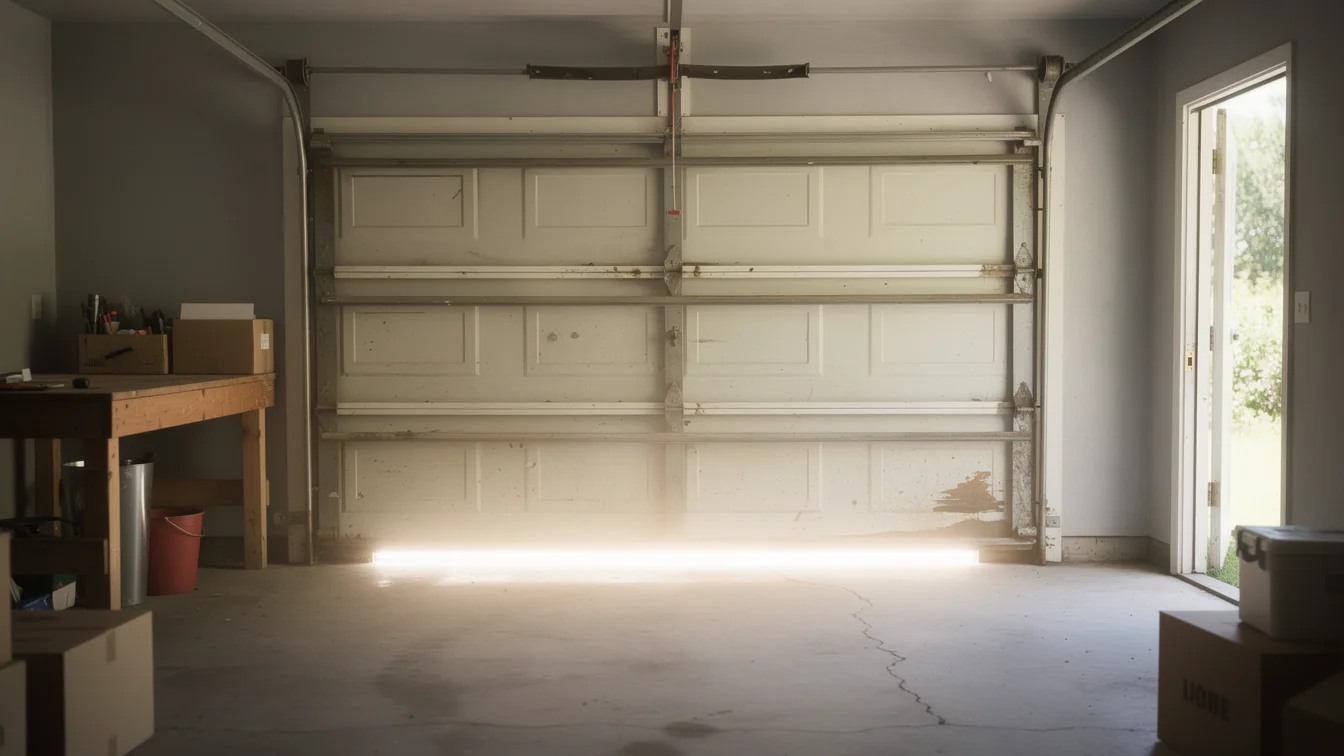
Most houses in this service area went up between 1938 and 1996, with the typical one built around 1967. Across the 44 named areas we cover, the bulk of that stock dates to the 1960s and 70s. That matters for garage doors because a door installed when one of these houses was built is almost always a single layer of steel or a slab of wood, no foam core, no thermal break, nothing bonded to the back of the panel.
Thirty, forty, fifty years on, that construction shows its age in specific ways. Panels oxidize from the inside out where there's no insulation layer to slow moisture. Hinges that were fine on a lighter door start to work loose under a heavier retrofit opener nobody adjusted for. Torsion springs sized for the original door sag when a panel gets swapped for something heavier without a spring recalibration.
We see a lot of doors that are original to the house, running on hardware nobody's touched since install. That's not neglect - it's just how long these doors last when the climate doesn't punish them. The issue is usually not whether the door still closes. It's whether the track, cable, and spring were ever matched to what's hanging on them now.
What the Weather Here Does to It
The climate here sits in a mild temperate band, which is the main reason so many original doors from the 1960s and 70s are still on their hinges. You don't get the deep freeze-thaw cycles that split wood panels or the summer heat spikes that warp steel in drier inland climates. No ice damming at the header, no slab doors cracking from frost heave under the track.
That's the good news, and it's real. The bad news is that mild weather doesn't stop mechanical wear - it just means the wear you see is almost always age and use, not storm damage. Springs fatigue on a cycle count, not a weather event. Rollers wear from the door going up and down, not from a hard freeze. So when a door on a house built in that 1938-1996 range starts binding or dropping unevenly, it's worth checking the spring and hardware before assuming the door itself needs to go. In this climate, the door often outlives the hardware holding it up.
What It Costs
We don't have a flat number to hand you here, because what a job costs depends on what's actually wrong - a cable snap is a different job than a full panel swap on an original 1960s door with obsolete track hardware. What we can say is that this area's median household income runs $130,583 across 280,164 households, with 116,359 of those owner-occupied. That's a household base that generally has room to plan a repair or replacement rather than put it off indefinitely.
On older houses, cost often comes down to parts availability more than labor. A door original to a 1967-built house may use hardware sizes or mounting patterns that aren't stocked anymore, which pushes a simple repair toward a partial or full replacement. We'll tell you straight if that's where your job is headed before we start, rather than quote a repair we know won't hold. If your door is original and the track hardware is the same vintage, ask about that up front - it changes the number more than the panel does.
When Waiting Is Fine
Not every noise or sag is urgent, and we'd rather tell you that than run a truck to a job that can wait. A door that's a little loud on an original roller, on a house from that 1960s-70s stretch most of this area was built in, is usually fine to leave alone until it's convenient. Cosmetic rust on a panel's surface, in a climate this mild, spreads slowly - it's not the same emergency it would be somewhere with real winters.
What shouldn't wait: a cable that's frayed, a spring that's visibly stretched or gapped, or a door that's started dropping unevenly on one side. Those get worse on their own schedule, not yours, and they can turn a $200 problem into a door off its track. The honest limit here is that we can't always save an original door once the track hardware itself is the problem - at that point replacement is usually cheaper than chasing parts for something fifty-plus years old. If you're not sure which category you're in, that's a five-minute look, not a big job.
Frequently asked questions
Is my garage door too old to repair?
Not necessarily. Age alone isn't the issue - a lot of doors from the 1960s and 70s stock common in this area are still structurally fine. The problem comes up when the track or hardware pattern is obsolete and parts aren't made anymore. We'll tell you plainly if that's the case rather than quote a repair that won't hold.
Does the mild climate here mean less wear on garage doors?
It means less weather-driven damage - no freeze-thaw cracking, no ice-dam issues at the header. But mechanical parts like springs and rollers still wear out from cycle count and age, not from storms. A door from a house built in the 1938-1996 range can still need spring or roller work even in a mild climate.
Why does my original garage door feel heavier or harder to lift?
Springs are sized to the door's weight at install. If the door's been changed, or the hardware has loosened and fatigued over the decades since a 1960s or 70s build, the spring tension can fall out of balance. That shows up as a door that feels heavy or won't stay put halfway open.
Should I insulate my old garage door?
Many original doors on older houses here were built without an insulation layer, since that wasn't standard when the house went up. Adding insulation is usually a replacement decision rather than a retrofit, and whether it's worth it depends on how the garage is used - we can walk through that on site.
Related garage door services in Vallejo
More garage door guides
Book garage door service in Vallejo
Call now or request a quote - tell us what the door is doing and where you are.