
Vallejo, CA · Garage Door Service
Safety Sensors and Why They Drift in Vallejo Garages
Why safety sensors drift out of alignment in Vallejo's 1960s-70s garages, what the mild bay climate does to brackets, and when a fix can wait.
- Repairs & new doors
- Springs & openers
- Serving 8 nearby communities
What Is Going On
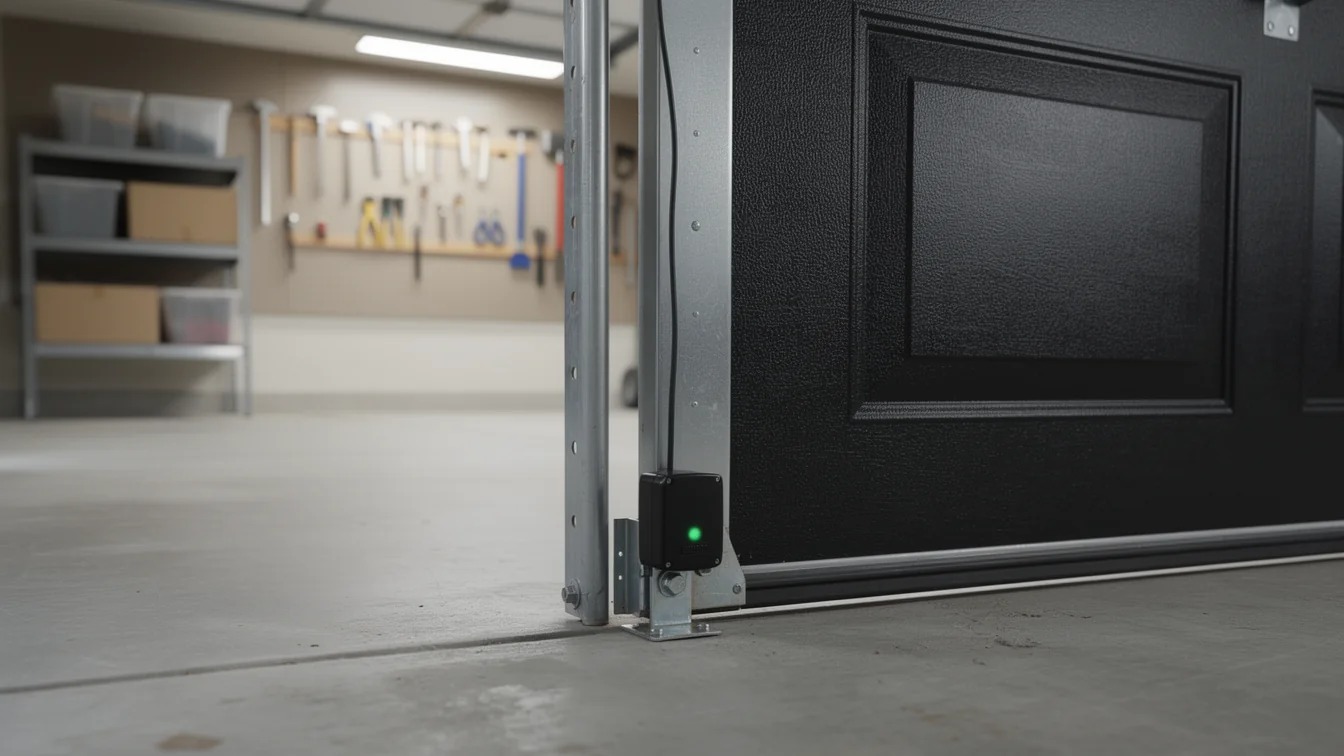
Most of the garages we get called to sit on houses built between 1938 and 1996, with the bulk of that stock going up in the 1960s and 70s across the 44 named areas that make up this service area. Those garages were framed decades before photo-eye safety sensors existed as a code requirement, which means the brackets holding them were added later, often as a retrofit bolted into a stud or track rail that was never meant to carry that load. Over years, that bracket flexes a hair every time the door runs, and a hair of movement is all it takes to throw the beam off. You'll see the little LED blink or go solid when it should be steady, or the door reverses for no reason you can see standing there. It's rarely the sensor itself failing. It's almost always the mount shifting, the lens filming over, or the wire nicked somewhere along a run that's been disturbed by every owner who's hung a shelf or a bike rack off that wall since 1967. Houses this age have had a lot of hands in that garage.
What the Weather Here Does to It
This area sits in a mild temperate band, so we don't get the hard freeze-thaw cycling that cracks brackets and warps rail in colder inland climates, and that's worth saying plainly because it means your sensors aren't fighting ice expansion every winter. But mild doesn't mean static. Temperature still swings enough through the day, and the bay fog brings in moisture that settles on a cold lens overnight and fogs it at the exact hour most people are backing out for work. On a lot of the older one- and two-car garages from that 1960s-70s build wave, the sensor brackets are light-gauge and were never sealed against condensation because nobody designing them in 1967 expected a safety-eye retrofit twenty years later. The drift you see isn't dramatic weather damage. It's small, steady movement and film buildup that adds up over a mild climate's worth of daily temperature swing rather than any one storm.
What It Costs
We can't post a number here that means anything without seeing the bracket, because the fix ranges from a two-minute realignment to a full sensor and wiring swap if the run has been nicked or the lens housing has cracked with age. What we can tell you is the variable that actually drives the cost: whether the original bracket from the house's build era is salvageable or whether it needs to be replaced outright, since a lot of 1960s and 70s mounts are too thin-gauge to hold a modern sensor securely once they've flexed. A straight realignment is the cheapest visit we run. A full sensor swap with new wiring costs more because of the labor to fish wire through an older wall cavity, not because the parts themselves are expensive. Ask for the breakdown before the work starts, not after.
When Waiting Is Fine
If your door still reverses reliably when something breaks the beam and the only symptom is an occasional blink on the LED, you don't need an emergency call. That's a maintenance item, not a safety failure, and it's honest to say we'd rather you wait and bundle it with another small job than pay a trip charge for a five-minute wipe-down of the lens. Where we draw the line is a door that stops reversing at all, or one where the sensor light is dead and stays dead. On houses from the 1960s and 70s stock that makes up most of this area, that's usually a wiring break inside an old wall, not a simple bulb or lens fix, and that one shouldn't sit. If you're not sure which you've got, a quick test is to wave a broom handle through the beam while the door closes and watch what it does.
Frequently asked questions
Why does my garage door sensor light flicker only in the morning?
Overnight moisture from the mild bay climate settles on the lens and hasn't burned off yet. Wipe both lenses with a dry cloth before you test it. If it still flickers once the lens is clean, the bracket itself has likely shifted and needs realignment, not cleaning.
Is sensor drift common in older Vallejo neighborhoods?
Yes. A lot of the housing in this service area was built in the 1960s and 70s, before safety sensors were standard, so the brackets were added later into framing that wasn't designed for them. That retrofit mount is the usual source of drift, not the sensor electronics.
Can I realign the sensors myself?
Often, yes. Loosen the bracket screws, aim both eyes until the LEDs go solid, and tighten carefully without twisting the mount. If the bracket itself is bent or the wire is damaged, that's a job for someone who can check the wiring run, not a DIY fix.
Related garage door services in Vallejo
More garage door guides
Book garage door service in Vallejo
Call now or request a quote - tell us what the door is doing and where you are.