Vallejo, CA · Garage Door Service
Garage Door Opener Repair, Built Around Vallejo's Housing Stock
Opener repair for Vallejo homes built mostly between 1938 and 1996, where original hardware and drive systems are past their service life. Same service area, no guesswork.
- Repairs & new doors
- Springs & openers
- Serving 8 nearby communities
What Causes It Around Here
Most of the openers we get called on sit in garages built between 1938 and 1996, with the bulk of that stock going up through the 1960s and 70s. That matters because a chain-drive opener from a 1967-built house has usually been swapped at least once already, and the replacement unit is often undersized for the door it's lifting - especially on the heavier wood panel doors common in that era of construction.
The mild temperate climate here doesn't put the same stress on openers that extreme heat or cold does elsewhere, so when a unit fails in this area it's rarely a weather story. It's almost always age, a worn drive gear, or a logic board that's been tripping a circuit breaker for months before anyone calls. Capacitors and drive gears degrade on a timeline, not a season, and a lot of the units out there are well past the point where parts are even stocked by the manufacturer.
We also see a fair number of openers that were installed on their own, without resetting the travel limits or force settings for the specific door. On older doors with sagging tracks or dried-out rollers, that mismatch between opener and door is what actually burns out the motor - the opener isn't broken, it's been fighting a door that needs separate attention.
What It Costs
We're not going to put a number here that doesn't match what you'll actually be quoted, because that number depends on whether this is a logic board, a drive gear, a capacitor, or a full unit replacement - and those are different jobs with different parts. What we can tell you is that a repair call and a replacement call get priced differently, and we tell you which one you're looking at before we start work, not after.
One honest limitation: if your opener is old enough that the manufacturer no longer makes the circuit board or drive gear for it, repair isn't really an option regardless of what it would cost - we'll tell you that straight instead of trying to source a part that doesn't exist anymore. For households across this area with a median income around $130,583, that's often still a smaller spend than most people assume, but we'd rather give you a real number on-site than a range that doesn't mean anything.
What the Repair Takes
Most opener repairs are a single visit. We test the logic board, check the drive system - chain, belt, or screw, depending on what's installed - and check the force and travel settings against the actual door, not just the opener's default settings. On the 1960s and 70s builds that make up most of the housing stock across this area, we're also checking whether the door itself is adding load the opener was never sized for.
If it's a board or capacitor, that's usually fixed the same visit. If the drive gear or chain is stripped, that's also a same-visit part on most residential units. Where it stretches to a second visit is a full opener replacement on a less common rail size, or when the existing wiring and mounting bracket don't match current units and need adapting. We don't try to force a wrong-fit part onto an old bracket just to close the job faster - that's the kind of fix that fails again in six months.
How It Shows Up
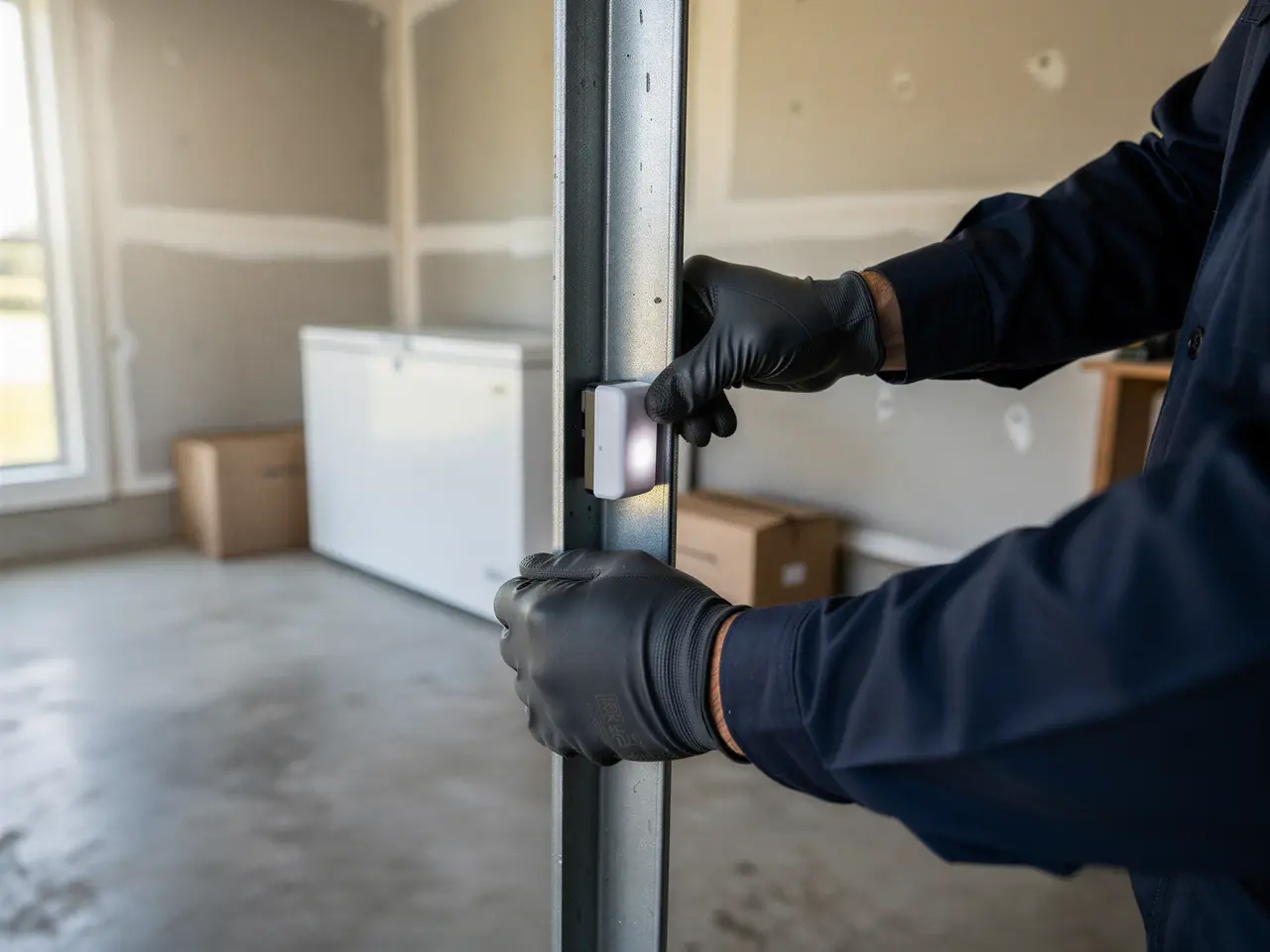
The classic sign is an opener that runs but the door doesn't move, or moves part way and reverses. On the older housing stock in this area - built as far back as 1938, with plenty from the 1960s - that reversal is often the opener's safety sensors doing their job because the door itself is out of balance, not an opener fault at all.
Other signs: the remote works but the wall button doesn't (or the reverse), grinding or clicking from the motor housing with no movement, or lights on the opener that flash a code instead of running normally. A unit that's suddenly louder than it used to be is usually a drive gear wearing out, which is a known failure point on units that have been running since the house was built or last remodeled.
If the opener runs completely silent and nothing happens - no light, no sound - that's more often a power or control issue than the drive mechanism, and it's worth checking the breaker before assuming the worst.
Frequently asked questions
My garage door opener makes noise but the door won't move. Is that the opener or the door?
On older homes in this area, built mostly in the 1960s and 70s, it's frequently the door - a broken spring or worn roller puts enough drag on the system that the opener motor runs but can't move the door. We check both before quoting a fix, because replacing the opener alone won't solve a door problem.
Can my garage door opener be repaired or does it need full replacement?
Depends on the part. Logic boards, capacitors, and drive gears are usually repairable on most residential units. If the manufacturer has discontinued parts for your specific model, which happens on older units, replacement is the only real option and we'll tell you that directly.
Why did my opener suddenly stop working with no warning?
Most sudden failures trace back to a capacitor or logic board that's been degrading for a while without visible symptoms until it finally trips. It's rarely weather-related given the mild climate here - it's almost always a component reaching the end of its service life.
Do you work on openers in houses outside Vallejo itself?
Yes, we cover the wider service area, including towns like Crockett, Rodeo, American Canyon, Hercules, and Benicia within a short drive, along with the other communities in the region.
By Neighborhood
Opener Repair across the Vallejo area
We also handle opener repair in these Vallejo-area suburbs.
Book garage door service in Vallejo
Call now or request a quote - tell us what the door is doing and where you are.