Vallejo, CA · Garage Door Service
New Garage Door Installation for Rodeo's 1970s Housing Stock
Rodeo homes mostly went up around 1972, which means original steel sectional doors on old relay openers. We install replacements sized for that era, 5 miles out of Vallejo.
- Repairs & new doors
- Springs & openers
- Serving 8 nearby communities
What the Repair Takes
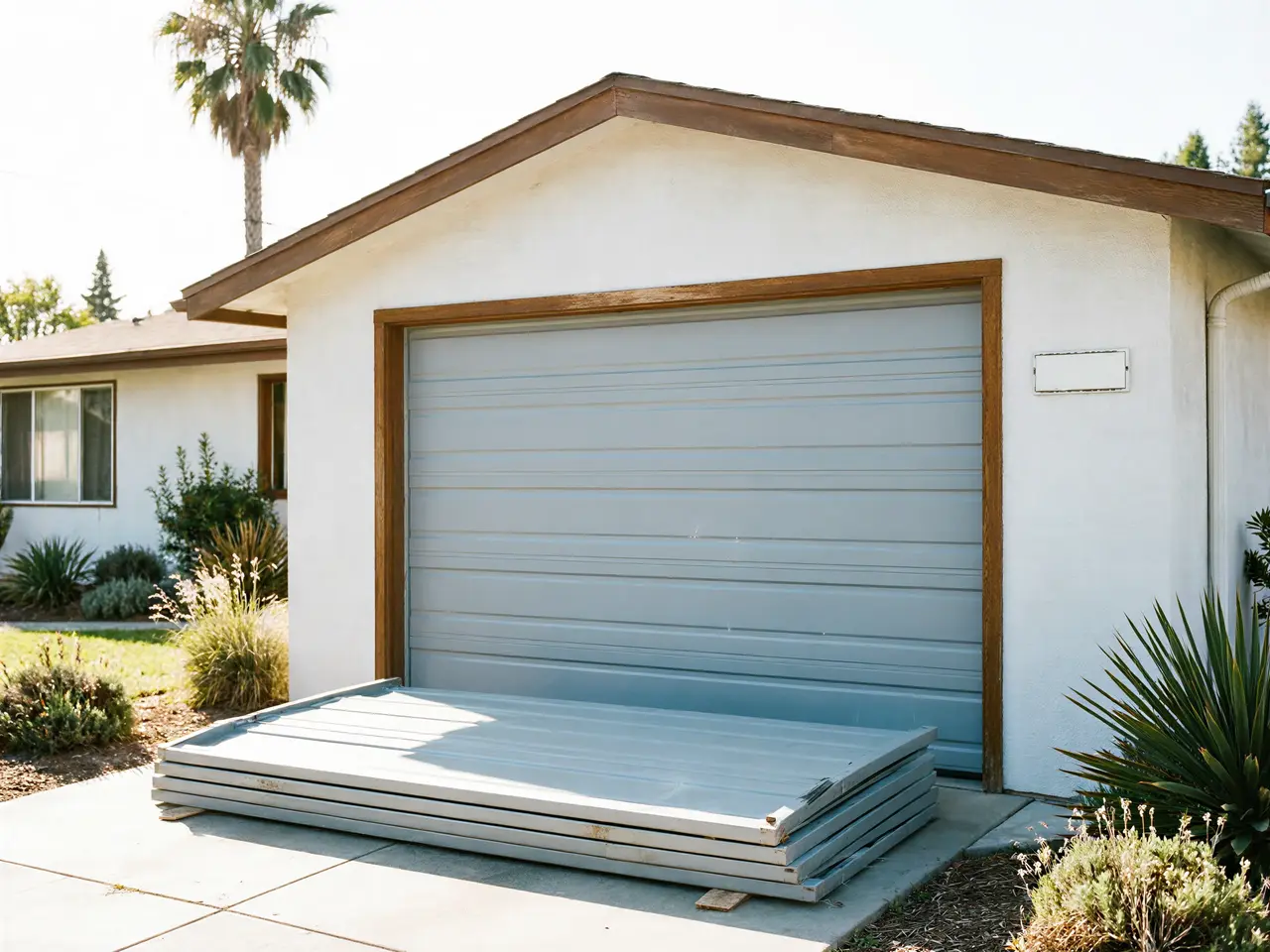
Most of what we pull out in Rodeo isn't a door that failed outright - it's a door that's outlived the house around it. The median home here went up around 1972, and a lot of those garages still carry their first or second door: steel sectional panels on a torsion or extension setup that was never built for a 50-year service life. A full install means stripping the old track and hardware down to the jambs, checking that the header can take modern spring tension (older framing sometimes can't without reinforcement), and setting a door sized to openings that don't always match today's standard rough-ins. We size springs to the actual door weight, not a one-size default, because insulated doors from current manufacturers run heavier than the hollow steel slabs these houses started with. On a straightforward swap with no header work, it's a one-day job. Where the framing needs shoring up first, it runs longer, and we'll tell you that before we start, not after we've opened the wall up.
How It Shows Up
The call usually starts with the door being noisy or heavy to lift by hand, not with it being broken. In houses built in the early 1970s, that's often the spring having gone soft rather than snapped, or rollers that have worn their track grooves oval over decades of use. Some owners notice the door sagging at the bottom corners - thin steel panels from that period dent and bow with age, and once a panel's bent, the rest of the hardware starts fighting it. Others just want the look updated; a steel slab door from 1972 doesn't do much for curb appeal or insulation on a house that's otherwise been remodeled. Either way, by the time we're called out, it's usually a replacement conversation rather than a patch job, because parts for openers and track systems from that build era aren't something manufacturers still stock.
What Is on the Truck
We come out of Vallejo, about 5 miles to Rodeo, so the truck is loaded for a full install before we leave the shop - we're not running back for a forgotten part. That means door sections in common widths, torsion springs rated across a range of door weights, galvanized track, and both belt and chain-drive openers, since older Rodeo garages vary in how much headroom they give us above the door. We also carry the jamb brackets and reinforcement struts needed when a header isn't rated for a heavier insulated door than the original. What we don't stock on the truck is anything custom-ordered - a nonstandard width, a specific finish, or a smart opener model outside our usual lineup means a short lead time while that part comes in, and we'll say so at the quote stage rather than promise same-day on something we don't have in hand.
What Causes It Around Here
The area's mild temperate climate means we're not dealing with freeze-thaw cracking or extreme heat warping panels the way some inland service areas do. What wears these doors out is simpler: age and daily cycling. A door installed when the house was built in the low-1970s has had 50-plus years of openings and closings on hardware that was standard for its time but isn't rated anywhere close to that lifespan today. Rodeo's household count is modest, just under 3,000, which keeps this from being the kind of area where track housing was mass-built with the cheapest hardware available - but it's still original-era stock on most streets, and that's the throughline on nearly every install call we take here.
Doing It Yourself
A torsion spring under full tension can put someone in the hospital, and that's true whether the door is brand new or from 1972 - we won't talk anyone through doing that part themselves. Swapping weatherstripping, lubricating hinges and rollers, or replacing a remote are reasonable DIY jobs on a door of any age. A full new-door install is a different scope: setting track plumb, balancing spring tension to the door's actual weight, and in some of these older Rodeo garages, confirming the header framing can even take a modern door's load. Get that wrong and the door either won't hold its position or puts stress on the jamb that shows up as cracking months later. If you want to size up what your garage needs before calling anyone out, our Rodeo garage doors page covers the general local breakdown, and our Vallejo installation page has the full rundown of what the install process looks like start to finish.
Frequently asked questions
How old are most garage doors in Rodeo likely to be?
Rodeo's housing stock centers on a median build year of 1972, so most original doors are steel sectional panels on torsion or extension hardware from that era. If your door and opener haven't been replaced since the house was built, they're running well past the service life either was designed for.
Do you have a shop in Rodeo?
No. We're based in Vallejo and drive out to Rodeo, about 5 miles, fully loaded for the job. There's no local branch here, just a truck stocked for installs on this area's typical door sizes and hardware.
Can my garage header handle a heavier insulated door?
Not always, especially on houses built around 1972 when lighter hollow steel doors were standard. We check header framing before installing anything heavier and will tell you up front if reinforcement is needed before the new door goes in.
Is Rodeo's climate hard on garage doors?
Not especially. The mild temperate climate here doesn't put doors through the freeze-thaw cycling or extreme heat swings that cause cracking and warping elsewhere. Most of what we see is straightforward age wear, not climate damage.
Book garage door service in Vallejo
Call now or request a quote - tell us what the door is doing and where you are.