Vallejo, CA · Garage Door Service
Garage Door Service for Rodeo Homes
Rodeo's houses mostly date to 1972, a few years past the service area's 1967 median, which changes the hardware our trucks carry out from Vallejo for this job.
- Repairs & new doors
- Springs & openers
- Serving 8 nearby communities
What the Repair Takes
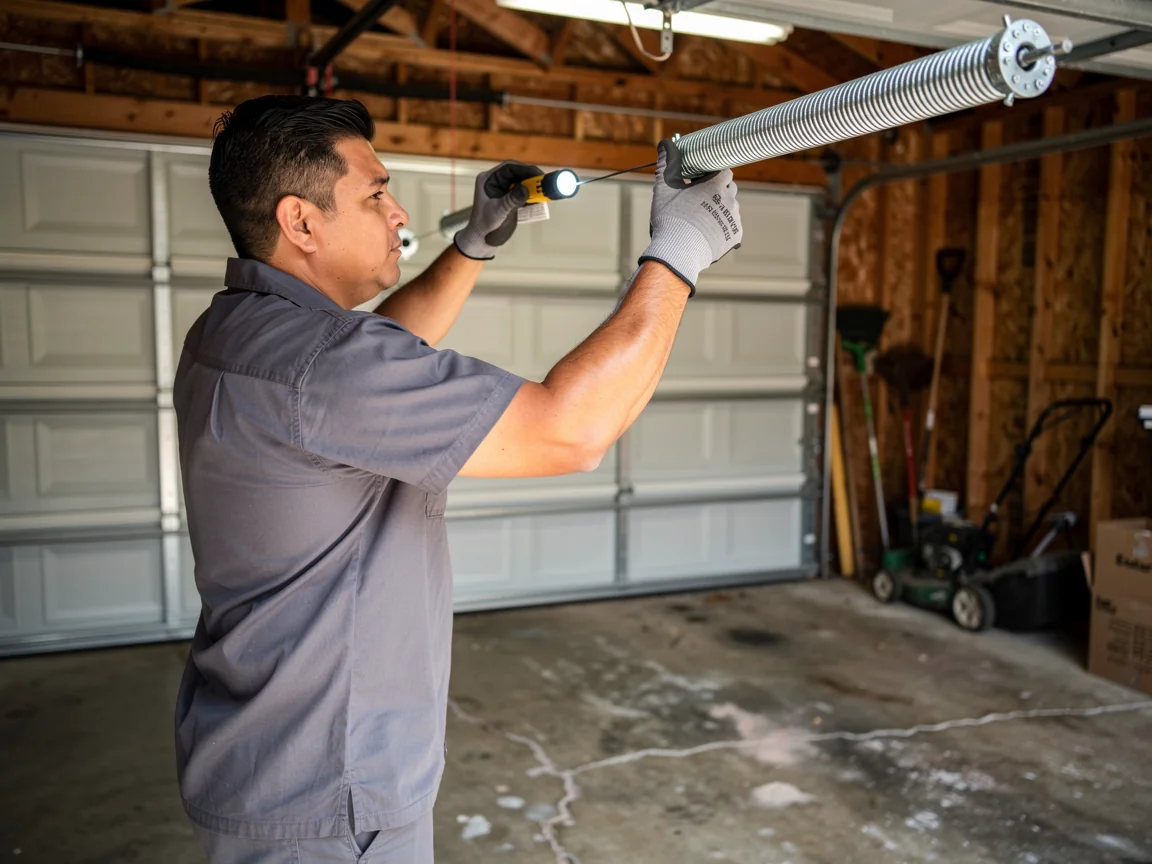
Rodeo sits about 5 miles from our Vallejo base, and the first thing that matters on a call here isn't the drive, it's the build year. The wider service area runs from 1938 to 1996 with a median around 1967, but Rodeo's housing stock clusters closer to 1972. That five-year gap sounds small until you're standing in front of the door. Early-70s garages were still being built with extension springs more often than the torsion setups that came standard a few years later, and the openers bolted onto them have usually been swapped out once or twice already, which means mismatched mounting holes and brackets nobody measured twice. A repair here often starts with figuring out what generation of hardware you're actually dealing with before you touch a tool. That diagnostic step takes longer in a mixed-era pocket like this than it would in a tract built all in one year. We're not guessing at a universal fix - we're matching what's on the wall, which is why the quote can shift once we're inside the garage and not just on the phone.
How It Shows Up
With roughly 2,969 households in Rodeo, the failure patterns repeat in a few predictable ways tied to that 1972 build window. Extension spring doors show up as a door that slams the last foot of travel or won't stay open on its own - the springs have lost tension gradually and nobody notices until the door is dead weight. Original track hardware on these houses tends to be narrower gauge than what's sold today, so a roller replacement sometimes means the whole track gets swapped too, not just the part that failed. Openers from the 80s and 90s retrofit onto 1972 doors are the other common call - a chain drive straining against springs that were never rebalanced for the motor's pull. None of this is dramatic. It's wear that was building for years and finally crosses the line on a cold morning.
What Is on the Truck
We stock for the hardware generation that actually shows up in this part of the service area, which for Rodeo means extension spring kits sized for early-70s doors, narrow-track rollers, and the cable drums that match them - not just the torsion-era parts that cover newer builds elsewhere. Openers are a mixed bag: we carry common replacement units, but a specific obsolete drive gear for a 1970s chain opener isn't something we keep ten of. If your door needs a part that's genuinely out of production, we'll tell you straight that replacement makes more sense than chasing a part, rather than stringing out a repair that won't hold. See what's included at /rodeo-garage-doors/ or look at the full range of work we do out of Vallejo at /garage-door-service-vallejo-ca.
What Causes It Around Here
The service area overall sits in a mild temperate band, so Rodeo doesn't get the freeze-thaw cycling that cracks concrete slabs or swells wood jambs the way a harsher climate would. That's a point in the homeowner's favor - it's not weather wrecking these doors. It's age and mismatch. A 1972 door on original hardware has had fifty-plus years of cycles on springs that were only rated for a fraction of that, and every owner who's added a heavier insulated panel or a stronger opener without rebalancing the spring tension has shortened the life of whatever's left. With median household income in the broader area at $130,583 against Rodeo's own figure closer to $88,819, we see more owners here holding onto original hardware longer and fixing in stages rather than replacing the whole unit at once - which is a reasonable way to spend money, as long as each stage is done to match what's already on the door.
Doing It Yourself
Lubricating hinges and rollers, tightening loose track bolts you can reach from the ground, and testing the auto-reverse by setting a 2x4 under the door - these are fine to do yourself and worth doing twice a year. What isn't worth it: touching an extension spring under tension, especially an older one on a 1972-era door where you don't know its rated cycle life or how it was last adjusted. That's a job where a spring lets go and takes a finger or an eye with it, not a Saturday project. If a cable has frayed or a door is binding in the track, call it in rather than force it - forcing a stuck door often turns a repair into a full track or panel replacement.
Frequently asked questions
Why does my 1970s-era door need different parts than my neighbor's newer one?
Rodeo's housing mostly dates to around 1972, which falls right at the edge between extension-spring doors and the torsion hardware that became standard shortly after. Two houses built a few years apart can have genuinely different spring systems, track widths, and mounting hardware, which is why a part that fits one door doesn't always fit the other.
Do you have a shop in Rodeo?
No, we work out of Vallejo and drive out to Rodeo, about 5 miles away, for calls. There's no local branch or depot here - just the truck and the parts it's stocked with for that day's job.
Is it worth repairing an original 1970s door or should I replace it?
It depends on what's failed. A spring or roller swap on an otherwise sound door is usually worth doing. If the opener, track, and panels are all original and all showing wear, replacement often costs less over time than patching each piece separately - we'll tell you which situation you're in once we look at it.
Book garage door service in Vallejo
Call now or request a quote - tell us what the door is doing and where you are.