Vallejo, CA · Garage Door Service
Garage Door Maintenance for Hercules' Late-'80s Doors
Hercules homes went up around 1988, mostly with steel sectional doors on factory-set torsion springs. Here's what keeps those doors running and what a tune-up here actually costs.
- Repairs & new doors
- Springs & openers
- Serving 8 nearby communities
What It Costs
A maintenance visit here is a flat labor call plus whatever parts the door actually needs - we don't have a published price list for Hercules specifically, so we won't invent one. What we can tell you is what drives the number: on a house built around the area's median year of 1988, you're almost always looking at a steel sectional door on torsion springs, not the older extension-spring setups you'd find on pre-1970 stock elsewhere in the service area. That means fewer surprises. The spring is sized to the door at the factory, the track is standard width, and the hardware hasn't been swapped out twice by two different owners the way it has on a 1960s door. Lubrication, roller inspection, cable check, and a balance test cover most of these doors in one visit. Where the cost climbs is if the opener is original to the house - mid-to-late-'80s chain-drive units are past end of life, and a failed opener board is a parts order, not a tune-up.
How It Shows Up
On a door this age, the first sign is usually noise, not failure - a roller that's gone from quiet nylon to a grinding sound as the bearing dries out. Hercules sits in the mild temperate band like the rest of this service area, so you're not fighting the temperature swings that crack seals or seize springs the way a hot inland climate would. What you are fighting is thirty-five-plus years of the same torsion spring doing the same lift cycle. These springs were rated for a service life, and a house built in 1988 is well past it on the original set. You'll feel it as a door that's heavier to lift by hand than it used to be, or an opener that strains and reverses partway up. That's the spring losing tension, not the opener failing - a distinction that saves people money when they catch it early instead of replacing a working opener.
How to Book
We run out of Vallejo, six miles from Hercules, so there's no local branch to call - one truck, one schedule, same crew that covers the rest of the service area. Booking a maintenance visit means telling us the door's approximate age and whether it's ever had a repair, which tells us whether to bring a torsion spring kit sized for a late-'80s door or something else. We don't quote a response time for Hercules specifically because we haven't been asked to promise one we can't back up from six miles out. If you want to see what else we handle in town beyond maintenance, that's on the Hercules garage doors page.
Where This Job Goes Sideways
The job gets harder when a homeowner's done one of two things: lubricated the track instead of the rollers (track grease collects dust and makes the door stick worse), or let a worn cable run long enough that it frays near the drum. On a 1988-era door, the panels themselves are usually fine - steel sectional doors from that period hold up well in this climate - so most sideways jobs here are hardware, not the door itself. The other way it goes sideways: someone replaces the opener without ever touching the spring, so the new opener is straining against a thirty-year-old spring and burns out early. Maintenance on a door this age means checking the spring and the opener together, not just whichever one is making noise.
Doing It Yourself
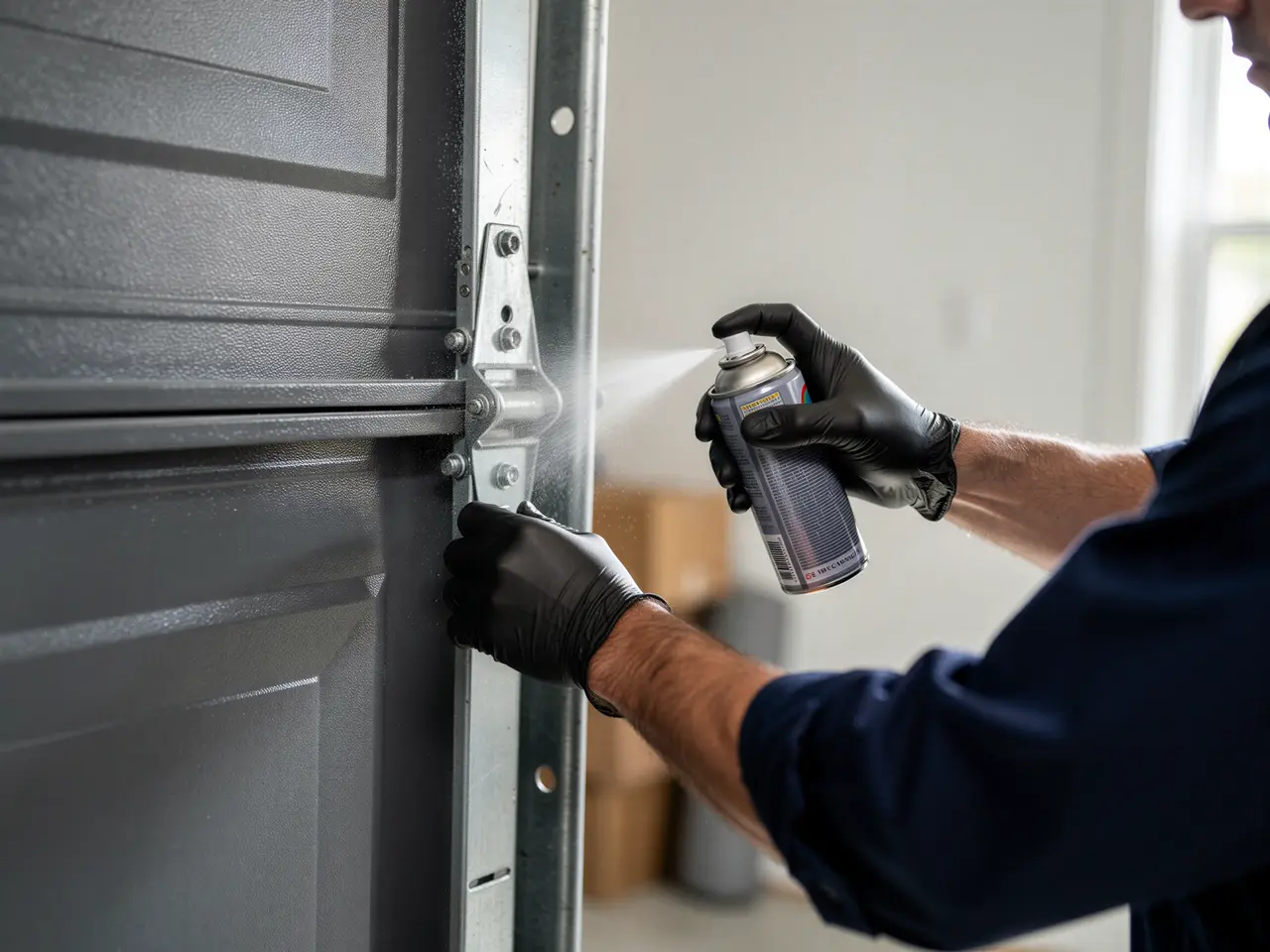
You can do real maintenance yourself on a door from this era. Wipe down the tracks, don't grease them. Lubricate the rollers and hinges with a garage-door-specific lubricant, not WD-40, which washes out and attracts grit. Check the cables visually for fraying near the drums. Test the auto-reverse safety feature by setting a piece of wood under the door and running it down - it should reverse on contact. What you should not do yourself: touch the torsion spring. It's under enough tension to cause a serious injury, and on a door built in 1988 that spring has had decades to work its way toward end of life, which is exactly when it's most likely to let go. If the door feels heavy to lift by hand with the opener disconnected, that's a call, not a DIY job. For the broader maintenance program across the rest of the area, see the Vallejo maintenance page.
Frequently asked questions
How old are most garage doors in Hercules?
The area's median home build year is 1988, which puts most original doors at steel sectional panels on factory-set torsion springs - newer than the 1938-1996 range across the rest of the service area, and generally in better physical shape, though the springs themselves are now past typical service life.
Do you have a shop in Hercules?
No. We run out of Vallejo, about six miles away, and cover Hercules from there. There's no local branch or drop-off location here - we bring the truck to the job.
Is it worth maintaining an opener that old?
Depends on the opener, not the door. A late-'80s chain-drive unit that's still running can often be serviced, but once the circuit board starts failing intermittently, parts for that generation are hard to source and replacement usually makes more sense than repair.
What's the biggest maintenance mistake you see in Hercules?
Greasing the tracks instead of the rollers. It feels like maintenance but it collects dust and grit, making the door bind worse than if nothing had been done at all.
Book garage door service in Vallejo
Call now or request a quote - tell us what the door is doing and where you are.