Vallejo, CA · Garage Door Service
What a Technician Checks First When We Pull Up
Vallejo Garage Door Pros explain what a tech checks first on a service call, tied to Vallejo's 1960s-70s housing stock and mild coastal climate.
- Repairs & new doors
- Springs & openers
- Serving 8 nearby communities
What Is Going On
Most of the call-outs we run in Vallejo start the same way on our end, even if the symptom sounds different every time. Houses here were mostly built between 1938 and 1996, with the median landing around 1967, and that one number explains a lot of what we find. A door that's acting up on a house from that era is usually fighting original hardware that was never meant to run this long, or a replacement door bolted onto tracks and jambs that are older than the door itself.
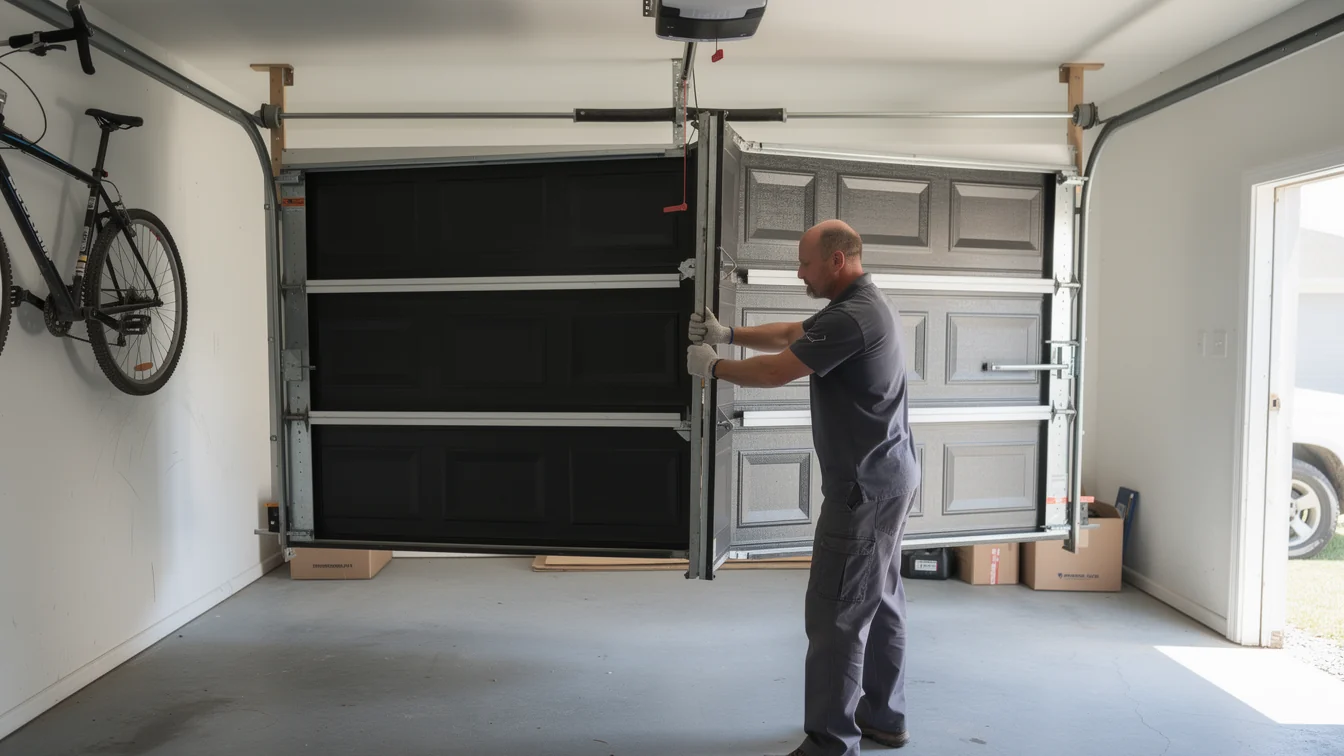
So the first thing a tech does isn't touch the opener. It's look at the year the house was likely built, based on the block and the panel style, and ask what's original versus what's been swapped. On a street built mid-century, we're checking torsion spring wind and cable routing before we ever plug in a laptop to read opener codes. Across the wider area - 44 named communities running from Crockett and Rodeo a few miles out to Berkeley and Lafayette further east - the housing stock skews the same way: 1960s and 70s construction dominates, which means the failure patterns repeat house to house more than people expect.
We're not guessing at this. We're starting from what's actually on the wall, not what a manual says a 'standard' door should have.
What the Weather Here Does to It
Vallejo sits in a mild temperate band, not the extreme heat or hard freeze that chews through hardware fast in other parts of the country. That's good news and it changes what we look for first. We're not chasing frost-cracked seals or sun-baked vinyl the way a tech in a harsher climate would be. Instead, in a mild coastal band, the slow failure is usually lubricant drying out at a normal pace and hardware wearing through ordinary daily cycles rather than weather shock.
That means when we check a door here, we're less worried about a single bad week of weather and more interested in how many years of steady, unremarkable use have passed since anything was serviced. A spring that's been wound since the house was built in the 1960s hasn't been stressed by freeze-thaw cycles - it's just old. A track that's loose hasn't been warped by heat - it's just never been re-shimmed. The mild climate buys houses here more years of life out of original parts than a harsher one would, but it doesn't stop wear, it just slows down the clock. That's the first thing we rule in or out before touching anything else.
What It Costs
We don't post a flat number here because the honest answer depends on what a tech finds once the door is open, and on a house with 1960s-era hardware, that's often more than the symptom suggested. A call that sounds like 'the opener stopped working' can turn out to be a spring that's one cycle from failing, which changes the job. We'd rather tell you that up front than quote a number that doesn't hold once we're standing in the garage.
What we can tell you is that the area this crew covers - from Crockett and Rodeo in close to Benicia, Pinole, Richmond, and out past Pleasant Hill - has a median household income around $130,583, and that tends to track with a market where homeowners replace worn hardware rather than let a door fail outright. That's a planning note, not a quote. If you want an actual number, that comes from a tech looking at your door, not from a page like this one.
When Waiting Is Fine
Not every noise is a job today. If a door built in the 1960s or 70s is slow, a little loud, or the opener light blinks before it catches, that's often just age catching up with original hardware in a mild climate that hasn't stressed it hard - it can usually wait for a scheduled visit rather than an emergency call.
Where waiting stops being fine: a spring that's visibly stretched or gapped, a cable that's frayed, or a door that drops instead of lowering on its own weight. Those don't get better on their own, mild weather or not. One limitation worth saying plainly - if a door has been patched more than once already, we'll usually tell you replacement is the better call rather than another repair, because at some point the original 1960s hardware isn't worth chasing anymore.
Frequently asked questions
Is my garage door old just because the house is old?
Not necessarily, but houses in Vallejo mostly date to 1938-1996 with a median around 1967, so a lot of doors and track hardware are original to that build era. A tech checks the hardware itself, not just the house age, before deciding anything needs replacing.
Does Vallejo's climate wear out garage doors faster?
No - this area sits in a mild temperate band, so we don't see the freeze-cracked seals or heat-warped tracks that show up in harsher climates. Wear here comes from steady daily use over decades, not weather extremes, which usually means slower failure, not faster.
Can you give me a price over the phone?
Not an honest one. What a job costs depends on what's actually found once the door's open, especially on older hardware where one symptom can hide a bigger issue. We'd rather look first than guess at a number that won't hold.
How do I know if my door can wait for a regular appointment?
If it's just slow or a bit noisy, that's usually fine to schedule normally, especially on an older door in a mild climate like this one. If a spring looks stretched, a cable's frayed, or the door drops on its own, that needs a call now, not a wait.
Related garage door services in Vallejo
More garage door guides
Book garage door service in Vallejo
Call now or request a quote - tell us what the door is doing and where you are.