Vallejo, CA · Garage Door Service
Is Your Old Garage Door Worth Fixing, or Time for a New One?
A look at what's worth repairing on Vallejo's older garage doors, built mostly from 1938 to 1996, and when the smarter move is replacement instead.
- Repairs & new doors
- Springs & openers
- Serving 8 nearby communities
What Is Going On
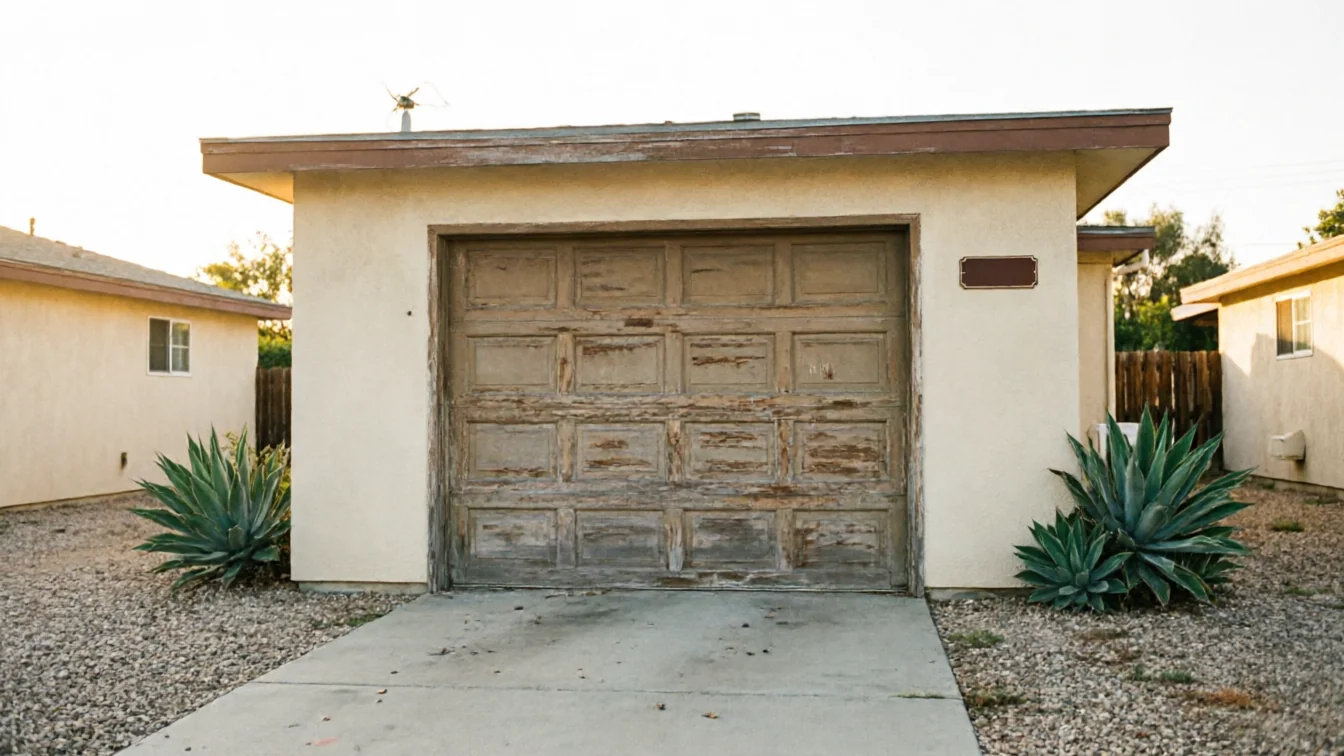
Most of the housing around Vallejo went up between 1938 and 1996, with the median landing around 1967. That means a lot of garage doors in this service area are original, or close to it - steel sectional doors on extension spring hardware, sometimes a single-piece door that swings up on a track nobody makes parts for anymore. Across the 44 named communities that make up this area, the stock leans hard toward 1960s and 70s builds, which is a specific era with specific hardware: lighter gauge steel, two-spring extension setups instead of torsion, and tracks sized for doors that weigh less than what gets installed today. When one of these doors starts acting up - slow to open, a panel that's bowed, a spring that's lost its tension - the question isn't just "what's broken." It's whether the rest of the door and track system is worth building around. A door from that era that's been kept dry and hasn't been hit by a car is often still straight and serviceable. One that's rusted through at the bottom panel or has a track bent from age usually isn't.
What the Weather Here Does to It
Vallejo sits in a mild temperate band, and that matters for how these old doors fail. We're not dealing with the freeze-thaw cycling that cracks panels or swells wood doors shut in colder climates, and we're not seeing the kind of heat that warps steel skins. So when a 1960s or 70s door in this area gives out, it's almost always mechanical wear, not weather damage - a spring that's cycled tens of thousands of times, rollers that have worn their bearings out, a cable that's frayed from age rather than from ice. That's actually good news for the "is it worth fixing" question. A door that's been protected from real weather extremes for its whole life often has a sound frame and sound panels underneath the worn-out moving parts. The decision usually comes down to the hardware, not the structure. If the track is straight and the panels aren't rusted or cracked, a spring and roller job can get years more out of a door that would've been replaced outright in a harsher climate.
What It Costs
We don't have a price list to hand you here, because what a given door needs varies too much door to door - a worn roller set is a different job than a seized torsion spring, and a door with an obsolete track profile is different again. What we can say is how to think about it. With median household income in this area at $130,583, full replacement is within reach for most owners here, which changes the math compared to areas where stretching an old door another year is the only option. If a repair would just delay the same failure by a season or two, it's often cheaper over time to replace. If the fix solves the actual problem - a spring, a cable, a set of rollers - on a door whose panels and track are still sound, that's money well spent. The honest limitation: we can't always tell which one it is without looking at the door in person, and parts for some of the older extension-spring setups from the 1960s and 70s take longer to source than current torsion hardware.
When Waiting Is Fine
Not every noise or slow spot means you need to call today. With 116,359 owner-occupied houses across this service area, many still running on torsion or extension hardware installed when the house was built in the 1960s or 70s, a worn spring is the single most common reason an older door stops working smoothly - and a spring that's just stiff, not broken, can usually wait until it's convenient. A door that still opens and closes evenly, seals at the bottom, and doesn't bind on the track isn't an emergency even if it's noisy. What doesn't wait: a cable that's visibly frayed, a door that's come off one side of the track, or a spring that's fully snapped, since the other spring on an old two-spring setup is usually close behind it and running the opener on one side can bend the top panel.
Frequently asked questions
Is it worth fixing a garage door from the 1960s or 70s instead of replacing it?
Often yes, if the panels are straight and the track isn't bent or rusted through. Most of the housing in this area dates to that era, and the springs, rollers, and cables are the parts that wear out - not the door itself. If those are the only issues, a repair can add years to a door that's otherwise sound.
Does Vallejo's weather shorten the life of an older garage door?
Not much. The mild temperate climate here doesn't put doors through the freeze-thaw cracking or heat warping that happens elsewhere, so when an older door in this area fails, it's almost always from mechanical wear and cycle count, not weather damage.
How do I know if my door is too old to repair?
Rust through the bottom panel, a bent track, or a frame that's pulled away from the wall usually means the structure, not just the hardware, has given out. A straight panel and solid track with a worn spring or rollers is a different story and usually worth fixing.
Why do parts for my old door take longer to find?
A lot of the housing stock here dates to 1938 through 1996, with plenty of doors from the 1960s and 70s still running original extension-spring hardware. That gear isn't what's stocked for current installs, so sourcing an exact match can take longer than a repair on a newer torsion-spring door.
Related garage door services in Vallejo
More garage door guides
Book garage door service in Vallejo
Call now or request a quote - tell us what the door is doing and where you are.